1.27.2009

Oneness-Trinitarian Pentecostal Dialogue:


from Dr. Daniel Segraves: http://danielsegraves.blogspot.com/

During the years 2002-2007, leading Oneness Pentecostal and Trinitarian Pentecostal theologians engaged in a Oneness-Trinitarian Pentecostal dialogue sponsored by the Society for Pentecostal Studies. The final report that emerged from this dialogue was published in Pneuma: The Journal of the Society for Pentecostal Studies, volume 30, number 2 (2008). Copies of the journal can be obtained from www.sps-usa.org.

This edition of Pneuma contains not only the final report; it also includes the following responses: James A. Johnson, the presiding bishop emeritus of the Pentecostal Assemblies of the World, "A Brief Oneness Pentecostal Response"; Kenneth F. Haney, the general superintendent of the United Pentecostal Church International, "A Brief Oneness Pentecostal Response"; George Wood, the general superintendent of the Assemblies of God, "A Brief Trinitarian Pentecostal Response"; William W. Menzies, "A Trinitarian Pentecostal Response"; Daniel L. Segraves, "A Oneness Pentecostal Response"; Richard Shaka, "A Trinitarian Pentecostal Response"; Daniel Ramirez, "A Historian's Response"; Ralph Del Colle, "A Catholic Response"; and David Reed, "An Anglican Response."

Since I am one of the contributers, I am able to post my response here. I encourage all who are interested to read all of the articles, including Frank D. Macchia's editorial, in Pneuma.


A Oneness Pentecostal Response Daniel L. Segraves


Introduction

Our Lord must be pleased that Oneness and Trinitarian Pentecostals are talking after nearly a century of virtual separation. Surely the silence of those with a common heritage, a common experience in Holy Spirit baptism, and a common sense of the eschatological significance of that experience has not pleased Him. Our differences are significant and enduring, but, as indicated in several sections of the Final Report, there is much that we share. This is cause for celebration. In 1916, we focused on those things that separated us. In 2008, we still acknowledge our distinctives, but we are seeking to understand each other even in our disagreements. Willingness to discuss Scripture in a thoughtful and respectful way is a sign of spiritual health. Nothing is to be gained by heated rhetoric. As Paul pointed out, we should be kind to one another, tenderhearted, forgiving one another, even as God in Christ forgave us (Eph 4:32).

Are risks involved in this conversation? No doubt. But some risks are worth taking. Whatever these risks may be, however, they were recognized and minimized by the goal of the dialogue, which was to gain “a clearer understanding of their positions and not the winning over of one side to the other or the adoption of a compromise position.” If we cannot talk, we cannot communicate. If we don’t communicate, there is little opportunity for old wounds to heal and healthy relationships to develop. Although no compromise is reflected in the Final Report, signs of mutual respect are evident. One such sign is seen in the joint conclusion on the baptismal formula: “Neither side compromised the respective teaching of their churches on baptism but agreed to the importance of continued discussion of the significance, mode, and formula of water baptism.” Another is seen in the joint conclusion to the discussion of Christology and the Godhead: “. . . both sides agreed that God’s nature requires additional discussion between Oneness and Trinitarian Pentecostals.” We are separated by many years and substantial emotional distance, to say nothing of our understanding of key biblical texts. But we have started something good that must continue until we both know we have completed our task.

Comments and Recommendations

The chief purpose of the dialogue was “to allow for a clearer understanding of Oneness and Trinitarian Pentecostal perspectives, including the variations possible within them, as well as both the commonalities and differences between them.” As this purpose statement indicates, it is important to note that there are variations among both Oneness and Trinitarian perspectives. The United Pentecostal Church International (UPCI) cannot and does not claim to speak for all Oneness Pentecostals, and it is recognized that there are various perspectives within the UPCI. This is acknowledged in the second paragraph of the Fundamental Doctrine of the UPCI: “We shall endeavor to keep the unity of the Spirit until we all come into the unity of the faith, at the same time admonishing all brethren that they shall not contend for their different views to the disunity of the body.” The merging conference of the Pentecostal Church, Incorporated (PCI) and the Pentecostal Assemblies of Jesus Christ (PAJC) in 1945 placed supreme value on the unity of the Spirit, abstaining from contention over divergent understanding. Oneness theology is not monolithic; neither is Trinitarian theology. As discussion continues, it will be important to maintain the attitude of mutual respect demonstrated in the opening dialogue while broadening the scope to include representation of various streams of thought. It is anticipated in the Final Report that it “would function as a launching pad for further discussion by a number of persons, from various contexts.” As this project proceeds and enlarges, we must maintain the purpose and goal of the original dialogue.

From the Oneness perspective, a significant achievement of the dialogue was the dispelling of “the idea that the Oneness/Trinitarian division had to do with a ‘new revelation’ by the Oneness intentionally proposed as an insight beyond the teaching of Scripture.” The misguided claim that Oneness Pentecostals embrace extra-biblical revelation has long served to caricature the Oneness perspective and to hinder communication with Trinitarians. As indicated in the Preamble to the Articles of Faith of the UPCI, “The Bible is the only God-given authority which man possesses; therefore, all doctrine, faith, hope, and all instruction for the church must be based upon, and harmonize with, the Bible.”

Since the purpose of baptism has been a point of disagreement, it is encouraging from the Oneness view to see that the Trinitarian team affirmed that the relationship between baptism and salvation “requires further study and discussion among Trinitarian Pentecostals” especially “in light of specific passages which appear to make a direct link between baptism and salvation . . . .” As it relates to the meaning of baptism, the Oneness team affirmed that the “complete experience of forgiveness/remission of sins comes through repentance and water baptism together. Repentance deals with a person’s sinful lifestyle, opening the door to a personal relationship with God, while baptism deals with the record and consequences of sin.” The UPCI understands Acts 2:38 to indicate that water baptism is an essential part of the experience of full salvation.

One point of tension between Trinitarian and Oneness Pentecostals has been the claim by some on the Oneness side that Trinitarians believe in three gods. On the other hand, some on the Trinitarian side have asserted that the Oneness view is the ancient heresy of Sabellianism reborn. The Trinitarian team affirms, “We as Trinitarian Pentecostals wish to stress that we believe in One God and not in three gods. According to Trinitarian dogma, ‘Father, Son, and Holy Spirit’ are not three ‘separate’ or in any way ‘divisible’ persons but rather three distinct but inseparable persons of one divine nature.” Dialogue will be enhanced and the Golden Rule will be obeyed if both Oneness and Trinitarian Pentecostals refrain from claiming that others believe something they deny. It is doubtful if any Trinitarian Pentecostals have ever professed to believe in three gods, and Oneness Pentecostals should not claim that they do. On the other hand, Oneness Pentecostals do not embrace the sequential modalism of Sabellianism, and Trinitarian Pentecostals should acknowledge this.

The Trinitarian team affirms that the words “nature” and “person,” while helpful, are fallible attempts to understand the unity and relational life of the Godhead. Indeed, it is acknowledged that there are “Trinitarian theologians who would question the use of this language to describe the life of the one God who is eternally distinct as ‘Father, Son, and Spirit,’ especially in the light of the fact that ‘persons’ in ancient Trinitarian writings did not carry the same meaning that it does today (as referring to separate and individual consciousnesses).” This affirmation is a hopeful sign for further dialogue; a great deal of the debate centers around the use of the word “person.” In their criticism of Trinitarian theology, many Oneness Pentecostals have understood the word “person” in the modern sense. They suspect that some Trinitarians who – like many Oneness Pentecostals – are not schooled in the intricate and subtle nuances of ancient Greek and Latin theologians, also understand the word in the modern sense. When the word “person” is read this way, it is difficult to see how the idea of three “persons” in the Godhead avoids tritheism. Alister E. McGrath’s simplified answer to the question, “How can God be three persons and one person at the same time?” may be helpful.

The word ‘person’ has changed its meaning since the third century when it began to be used in connection with the ‘threefoldness of God’. When we talk about God as a person, we naturally think of God as being one person. But theologians such as Tertullian, writing in the third century, used the word ‘person’ with a different meaning. The word ‘person’ originally derives from the Latin word persona, meaning an actor’s face-mask—and, by extension, the role which he takes in a play.

By stating that there were three persons but only one God, Tertullian was asserting that all three major roles in the great drama of human redemption are played by the one and the same God. The three great roles in this drama are all played by the same actor: God. Each of these roles may reveal God in a somewhat different way, but it is the same God in every case. So when we talk about God as one person, we mean one person in the modern sense of the word, and when we talk about God as three persons, we mean three persons in the ancient sense of the word. . . . Confusing these two senses of the word ‘person’ inevitably leads to the idea that God is actually a committee . . . .

The Final Report points out that “the language of ‘persons’ is not sacred in Trinitarian theology.” Although there are no doubt many Trinitarian theologians who would disagree with this statement, it may provide a way forward in ongoing discussions. The question asked by the Trinitarian team concerning A. D. Urshan’s 1919 acknowledgement that there is “a mysterious, inexplicable, incomprehensible three-ness” in the “plurality of God’s mysterious Being” must be explored more fully.

In a joint affirmation, both teams “recognized that ‘Spirit baptism’ is essential to the Christian life broadly conceived, involving the entire span of one’s conformity to Christ . . . .” The issue that is still of concern as it relates to salvation “has to do with the role of speaking in tongues in conversion/initiation.” The Oneness team affirmed “that repentance, water baptism, and the baptism in the Holy Spirit are integral aspects of conversion/initiation; and that speaking in tongues is the initial physical evidence of the baptism in the Holy Spirit.” As David Bernard points out, “The early Pentecostals typically used ‘conversion’ to describe the time they turned from sin and joined a Christian church, which often occurred long before they received the Holy Spirit.” In practice, some pastors in the UPCI continue to refer to repentance as conversion, although they refer to repentance, water baptism, and the baptism of the Holy Spirit as full salvation, regeneration, or the new birth.

The joint conclusion on salvation includes a discussion of the significance of the term “full salvation” as found in the Fundamental Doctrine of the UPCI. It was affirmed by the Oneness team “that salvation is a process which begins with a profession of faith and repentance and that the fullness of salvation includes both water baptism in Jesus’ name and the baptism of the Holy Spirit with tongues. Thus, they acknowledged that many people have entered into a relationship with Jesus Christ based on faith and repentance but should continue their experience to receive everything that God has commanded and provided. . . . They held that most Oneness Pentecostals do not make a strong separation between ‘salvation’ and the ‘full salvation’ but affirm the apostolic proclamation in Acts 2:38 as the New Testament message of salvation.”

A Look to the Future

Those who participated in the five-year study leading up to this Final Report are to be commended for their willingness to invest themselves in this effort. For much of the twentieth century, it seemed impossible that such an event could ever take place. This is of historic significance, it provides the possibility of the healing of wounded relationships—both personally and organizationally, and there is the potential for increased understanding not only of opposing points of view but also of Scripture. The road ahead is long, possibly filled with unforeseen obstacles, and no one knows where it will end. But it is a road worth taking, for it is always right for good and sincere people to sit together before their open Bibles, searching them as did the Bereans, asking God to guide them in their study by his Holy Spirit. I think it would be appropriate to conclude this response with words I have written elsewhere.

On a practical level, the adherents of Oneness theology face the challenge of thoroughly investigating the historic doctrine of the Trinity so as to accurately understand and represent its views rather than succumbing to popular misconceptions and misrepresentations. Only by making the effort to understand a perspective with which they do not agree can they have meaningful interaction with those who hold an opposing view.

On the other hand, it is to be hoped that those who embrace Trinitarian theology will reciprocate by carefully examining the claims of mainstream Oneness theology, even as it continues to develop, rather than focusing on abandoned extremes to justify a quick dismissal of legitimacy.

If Trinitarian and Oneness theologians can refrain from drawing caricatures of opposing viewpoints, seeking understanding and doing theology in a spirit of godly reverence and mutual respect, they may discover diminishing differences and increasing agreement on essential points. Although the two views will doubtless never coalesce, God would be honored by a decrease in heated rhetoric and an increase in prayerful and thoughtful interaction.


Notes

For some reason, I could not transfer the article's footnotes to this post. Most of the direct quotes are from the Final Report referenced above. The quote from Alister E. McGrath can be found in his Understanding the Trinity (Grand Rapids: Zondervan, 1988), 130-131. The quote from my work is located in Stanley M. Burgess, ed., Encyclopedia of Pentecostal and Charismatic Christianity (New York and London: Routledge, 2006), 344-345.

1.03.2009

Foot-washing and Contemporary Practice: Should I Wash Your Feet?


You know Lord how I serve You,
with great emotional fervor,
in the limelight.
You know how eagerly I speak for You,
at a women’s club.
You know how I effervesce when I promote
a fellowship group.
You know my genuine enthusiasm
at a Bible study.
But how would I react, I wonder,
if You pointed to a basin of water,
and asked me to wash the calloused feet
of a bent and wrinkled old woman,
day after day, month after month,
in a room where nobody saw,
and nobody knew?

Ruth Harms Calkin

Introduction:

As the poem by Calkin demonstrates, foot-washing is a humbling act. This act is not frequent in the repertoire of the lords, or even fishermen apparently like the disciples themselves. The Gospel books of Luke and John are the only Gospel books which record Jesus washing the feet of his disciples. The last foot-washing is found in 1 Timothy 5:10 by the Apostle Paul.

Montague S. Mills suggests this Gospel story may be best read in the following order: Luke 22:24, John 13:2–17, Luke 22:25–30, John 13:18–20. Mills suggests that when read in this order "they complement and supplement each other very well indeed. (1)

In John 13:6 Peter is surprised that the Lord Jesus would attempt to wash his feet. Such feelings are also why many people will end up avoiding the practice altogether. For some, the idea of touching another persons bare foot is too much. This is indeed the point, since from Bible times it was an expression of hospitality extended to guests done by servants and occasionally the wife of the house. In ancient times people traveling dusty roads frequently needed to wash their feet for comfort and cleanliness. It was a job typically done by servants.

Foot-washing was generally performed by the lowliest servant in the household (c.f. Luke 7:44). At the Lord’s Supper, Jesus arose during the supper and washed His disciples’ feet. He explained that this act was an example of the humble ministry that they must always be ready to perform for one another. For example, John 13:5-17 states:

Jesus knowing that the Father had given all things into his hands, and that he was come from God, and went to God; (4) He riseth from supper, and laid aside his garments; and took a towel, and girded himself. (5) After that he poureth water into a basin, and began to wash the disciples' feet, and to wipe them with the towel wherewith he was girded. (6) Then cometh he to Simon Peter: and Peter saith unto him, Lord, dost thou wash my feet? (7) Jesus answered and said unto him, What I do thou knowest not now; but thou shalt know hereafter. (8) Peter saith unto him, Thou shalt never wash my feet. Jesus answered him, If I wash thee not, thou hast no part with me. (9) Simon Peter saith unto him, Lord, not my feet only, but also my hands and my head. (10) Jesus saith to him, He that is washed needeth not save to wash his feet, but is clean every whit: and ye are clean, but not all. (11) For he knew who should betray him; therefore said he, Ye are not all clean. (12) So after he had washed their feet, and had taken his garments, and was set down again, he said unto them, Know ye what I have done to you? (13) Ye call me Master and Lord: and ye say well; for so I am. (14) If I then, your Lord and Master, have washed your feet; ye also ought to wash one another's feet. (15) For I have given you an example, that ye should do as I have done to you. (16) Verily, verily, I say unto you, The servant is not greater than his lord; neither he that is sent greater than he that sent him. (17) If ye know these things, happy are ye if ye do them. KJV

Why should I wash your feet today though?

Foot-washing? To some the very image might invoke a shudder. Isn't helping one another or occasionally doing good deeds appropriate? To some degree, these deeds are exactly what Christ would have us do. In fact, to Christ the greatest must be a servant. It is our devotion and commitment to Christ-like humility however that should sustain us in all that we do.

Washing the feet of another is not limited to simply hospitality. Tertuallian, Chrysostom, Augustine, and even Origen advocate foot-washing as part of Christian tradition. For many years Catholics have held this act as a sacrament. St. Bernard of Clairvaux (1090-1153) is such a one. In fact, Herbert Thurston states, "In 694 the Seventeenth Synod of Toledo commanded all bishops and priests in a position of superiority under pain of excommunication to wash the feet of those subject to them." (2)

Later groups like the 11th and 12th century Albigenses and Waldenses observed foot washing as a religious rite. Martin Luther would later oppose footiwashing. Anabaptists and some Pietists groups held to the ritual as well. Mennonite groups, differing baptist groups, Seventh-Day Adventists, and Brethren in Christ all practice foot-washing as well. (3)

The Apostle John records that after the Lord’s Supper had been partaken and Jesus Himself had washed the feet of the disciples,

(12) So after he had washed their feet, and had taken his garments, and was set down again, he said unto them, Know ye what I have done to you? (13) Ye call me Master and Lord: and ye say well; for so I am. (14) If I then, your Lord and Master, have washed your feet; ye also ought to wash one another's feet. (15) For I have given you an example, that ye should do as I have done to you. (16) Verily, verily, I say unto you, The servant is not greater than his lord; neither he that is sent greater than he that sent him. (17) If ye know these things, happy are ye if ye do them. John 13:12-17 KJV
Jesus says that what has been done, the Lord’s Supper/Communion and now the Foot-washing, was given BY HIM as an “example” that we should follow. Was the only meaning here for us to ritualistically wash each others feet? The foot-washing was a vehicle by which Christ portrayed the Christian virtue of humility and servitude to each other and their neighbor.

Christ tells us that if we know these things, happy are you if you do them. In fact, in 1 Timothy 5:10, prior to the writing of the Gospels, the Apostle Paul is writing before the 1st Century and suggests that the early church followed Christ’s example in observing the ritual of foot-washing. Paul states:

Do not let a widow under sixty years old be taken into the number, and not unless she has been the wife of one man, (10) well reported for good works: if she has brought up children, if she has lodged strangers, if she has washed the saints feet, if she has relieved the afflicted, if she has diligently followed every good work. 1 Timothy 5:9-10 NKJV

To Paul it seems, the idea of foot-washing is a "good work" done by believers. Ultimately, each Christian should strive to be Christ like in honoring Him and remembering His saving work for all humanity. Foot-washing is honoring Jesus and His sacrifice. As humans we owe a debt that we can never pay, but a thank you is appropriate. Foot-washing is not a primary issue or, in other words it does not effect salvation of the believer directly. A proud spirit should be cautioned against here. We should be willing to serve and promote the Christian virtue of humility. Proverbs confirms this:

Pride goes before destruction, a haughty spirit before a fall. Proverbs 16:18 NIV


Five Conclusions for Contemporary Christians:

First, foot-washing is an ancient and Biblical tradition of servitude in love (See Genesis 18:4, 19:2). Christ used this tradition to point out that the greatest among us must also be willing to serve.

Second, Christ washed all the Disciples feet. Here it seems He indicates His and subsequently our individual obligation to serve the whole. Jesus washed all the feet of the disciple and we can presume that includes Judas Iscariot. Jesus did so knowing the betrayal of Judas in advance.

Third, It is directly related to battling pride and conforming human nature to the will of God. If pride and conformation of human nature to divine principles is not being implicated in the texts of Scripture then very little can be said about the text all. Note 13:16

Verily, verily, I say unto you, The servant is not greater than his lord; neither he that is sent greater than he that sent him.
In Luke 22:24-30 the disciples had been bickering over who would be the first in the Kingdom of Christ. This precedes Luke's account of the foot-washing incident.

Fourth, foot-washing is a continual act that we do literally and in practical living amongst others. It should be natural for believers today to gather and wash each others feet today in order to express their devotion and commitment to humility and servitude to the local Body of Christ. Some do this once or twice a year. It is truly a personal experience in humility.

In practical living though, the principle Christ is portraying should not be reserved for ritual foot-washing. An everyday attitude of humility and serving should be the permanent posture of the Christian believer.

Fifth, in the book--Alone with God--by John MacArthur proposes that the act of foot-washing was more than an example of humility. When this act was done by Christ it also represented "a picture of the forgiveness God gives in His repeated cleansing of those who are already saved." Although we must not wash our feet each time we sin, MacArthur also suggests that "purification is necessary every day because daily we fall short of God’s perfect holiness." (4)

This point overlaps with the third point since it is to remove pride and cause us to humble ourselves. At regeneration God changes our spiritual man but our human nature still exists and still must be sanctified.

Pentecostal Foot-Washing:

Vinson Synan, from Regent University, has noted that the teachings of early Pentecostal believers were defined early on. Groups like the Church of God in Christ (COGIC), The Churches of God (COG), or the Pentecostal Holiness Church are early 19th Century Pentecostal groups. The practice and teachings of these early Pentecostals typically consisted of a strong preaching diet about a life of holiness and the baptism of the Holy Ghost.

Shortly after what Synan terms the "'oneness' controversy" (1913), groups like COGIC added foot-washing as a sacrament. COG founder A.J. Tomlinson forbid tobacco and alcohol amongst the beleivers and also required foot-washing as an ordinance.
(5) Jack W. Hayford, pastor of the Foursquare Church in Los Angelas, states that "A number of Evangelicals and Pentecostals practiuce footwashing, following the example and instruction of Jesus."(6)

David K. Bernard in, History of Christian Doctrine, notes that most Oneness Pentecostal organizations worldwide practice foot-washing as an "ordinance"(7). The United Pentecostal Church International is one of the world's largest Oneness groups. Foot-washing is encouraged in their Articles of Faith and they urge all its members to practice this "in imitation of Christ and as a manifestaion of humility."(8)

Conclusion:

The practice of foot-washing revives an ancient principle within each of us. A principle of servanthood, humility, and forgiveness. Foot-washing is symbolic and reminds us that we are called to serve, for the glory of God.


NOTES:

(1)
Mills, S. Montague. (1999). The Life of Christ : A Study Guide to the Gospel Record. Three volumes: 1. The Advent of Jesus 2. The Beginning of the Gospel 3. Jesus presents Himself ot Israel. Dallas: 3E Ministries.

(2)
Thurston, Herbert. "Washing of Feet and Hands." The Catholic Encyclopedia. Vol. 15. New York: Robert Appleton Company, 1912. 3 Jan. 2009 .

(3)
Fahlbusch, E., & Bromiley, G. W. (1999-<2003).>The encyclopedia of Christianity (2:322). Grand Rapids, Mich.; Leiden, Netherlands: Wm. B. Eerdmans; Brill "The Encyclopedia of Christianity is the first of a five-volume English translation of the third revised edition of Evangelisches Kirchenlexikon.

(4) MacArthur, John (1995). Alone with God. Includes indexes. Wheaton, Ill.: Victor Books.

(5)
Synan, Vinson (2001). The century of the Holy Spirit : 100 years of Pentecostal and charismatic renewal, 1901-2001 (104). Nashville: Thomas Nelson Publishers.

(6)
Hayford, Jack W., & Thomas Nelson Publishers. (1995). Hayford's Bible handbook. Nashville: Thomas Nelson Publishers.

(7) Bernard, David K. A History of Christian Doctrine, © 1999 David K. Bernard Word Aflame Press

(8) Bernard, David K. Understanding the Articles of Faith ©1998, Word Aflame Press

Time Needs No Permission


Quickly is how time seems to pass
Especially when happy and glad
In sure and steady steps time marches from the past.
Time in the present is really not so bad
Since time is not past or future, can it last?


Time is like a ball of yarn, which rolled from a shelf.
It falls and bounces yet with each motion it moves toward its end
In spite of watcher or location, time marches despite vanity or even self
Within its bounds are we tightly held, as God does intend.
When the yarn seems fully undone, an endless yarn has really been spun.

12.27.2008

Musings on Christian Influence in India


India is place of ancient things such as the most ancient sacred text, e.g. the Vedas. It is also a place of ancient people. A people seemingly stuck in a time of animism and worship of the created things. Sadly their worship does not extend to their actual Creator.

Christian influence in India has been profound. “It is widely believed that St. Thomas, the disciple of Jesus, first introduced the Christian faith to India nearly two thousand years ago.” Indeed, Christians in the city of Malabar “claim their church was “founded by the apostle Thomas.” They also suggest that Christianity was “certainly present in India by 300s.” It would be much later when European Christians would be instrumental in bringing significant growth of Christianity in India. This form of Christianity, which is primarily Western, was preceded by believers living in Portugal around 1498.

It is known that Gregory XIII (1502-1585) encouraged early missionizing of India. Gregory and a subsequent Catholic missionary to India—Francis Xavier (1506-1552)—were both believers in the Inquisition. Xavier landed in Goa, India in 1542. Goa is the smallest state in India in terms of both population and topography. Like most in his time, he saw the indigenous population as “rif-raff” and in sore need of Catholic indoctrination. Xavier was responsible for Jesuit mission work in 1540’s and also later in Madura. It has been estimated that Xavier and other Catholic missionaries won 150,000 converts by 1700. The influence of the Catholic Church however is longstanding and far reaching even today.


William Carey and Alexander Duff:


A Lutheran mission was established by 1706 and perhaps had a population of 20-40,000 believers. The highly impacting efforts of later Protestants would prove most successful in many regards (e.g. education, grammar, literature, medicine). This success was spawned in part by William Carey and Alexander Duff.

Carey’s influence, since his arrival in 1793, was very successful. He succeeded in having sati abolished from much of India. In 1992, Christian History, recorded some interesting statistics about Christianity during his time and just prior.

When Carey arrived he landed in Calcutta. From there he soon moves further inland. To preserve finances, he lives for three months in a “huge area of jungle, swamps, and rivers, to cultivate some rent-free land; begins building bamboo hut.”

Industrializing and education was a severe need in India at this time. One of the most influential achievements, while in Serampore, was when missionaries from England join Carey, andestablish a mission and printing press.

Alexander Duff (1806-1878), a Scottish Missionary, saw the cultural primitiveness of the Indians and “introduced British-style higher education” by the 1830’s. Duff envisioned and implemented a new approach to learning for the indigenous population. Although, he saw the negatives of Indian culture he simultaneously saw its potential.

Duff was a minister with the Established Church of Scotland in India. He quickly opend a school in Calcutta in 1830. His school would become a prominent center for education in India. In 1843 he joined the Free Church of Scotland and lost all of his Indian missionary property. During his last stay (1856-1865)in India he laid the foundation for the University of Calcutta (see picture).

Since 1855:

Starting in 1855, Protestant groups began to work together and unify. After a series of conferences in 1908 the South India United Church ( Presbyterian and Congregational) was formed. Later, in 1947 India experienced a further evolving into the formation of the Church of South India.

By the late 1900’s Christianity had taken a large role in the language and education of Indian people. In 1997, India Today reported the top ten colleges in India. Fifty percent of them were Christian. Using a 1991 a census, there is over 23 million Christian in India. These numbers seem positive but are actually nearly insignificant when we consider it is only 2.3 percent of the total Indian population. Some Christian organizers estimate more like 50 million.

Contemporary Indian Christianity:

In general, much of Christianity has evolved into Hindu Christianity. “Many Hindus are ready to accept the ethical teachings of the Gospels, particularly the Sermon on the Mount (whose influence on Gandhi is well known), but reject the theological superstructure.” The exclusive claims of Christianity are doubted and rejected. In fact, many higher class families in India send their children to high-quality schools that are typically organized by Christians associations or groups.

No matter which statistic we choose Christianity is growing in India. In the city of Delhi there are over 600 hundred churches with services in almost any major language. Bangalore has 970 churches and at least twelve accredited theological education centers. Chennai has a Christian population of 10 percent with more than 2,000 Christian churches scattered about the city.

The largest churches in Chennai however are Pentecostal in theological praxis. The New Life Assembly of God and the Apostolic Christian Assembly average about 23,000 and 15,000 in their Sunday School attendance records.


NOTES:

1. Houghton, Graham. "Christian Impact on India, History of." Encyclopedia of India. Ed. Stanley Wolpert. Vol. 1. Detroit: Charles Scribner's Sons, 2006. 247-252. 4 vols. Gale Virtual Reference Library. Gale. Liberty University. 16 Dec. 2008 .
2. William Carey's India." Christian History 11.4 (Nov. 1992): 25. Religion and Philosophy Collection. EBSCO. [Library name], [City], [State abbreviation]. 16 Dec. 2008 3. "Duff, Alexander" The Concise Oxford Dictionary of the Christian Church. Ed. E. A. Livingstone. Oxford University Press, 2006. Oxford Reference Online. Oxford University Press. Liberty University. 27 December 2008
AN=9604291061&site=ehost-live&scope=site>.
4. India, Pakistan, and Bangladesh, Christianity in" The Concise Oxford Dictionary of the Christian Church. Ed. E. A. Livingstone. Oxford University Press, 2006. Oxford Reference Online. Oxford University Press. Liberty University. 17 December 2008
5. Indian custom of a widow burning herself, either on the funeral pyre of her dead husband or in some other fashion, soon after his death. "suttee." Encyclopædia Britannica. 2008. Encyclopædia Britannica Online. 16 Dec. 2008 .
6. Zondervan Handbook to the History of Christianity (p. 470). Copyright © 2006 by Jonathan Hill
7. "Hinduism." Encyclopædia Britannica. 2008. Encyclopædia Britannica Online. 16 Dec. 2008 .

12.22.2008

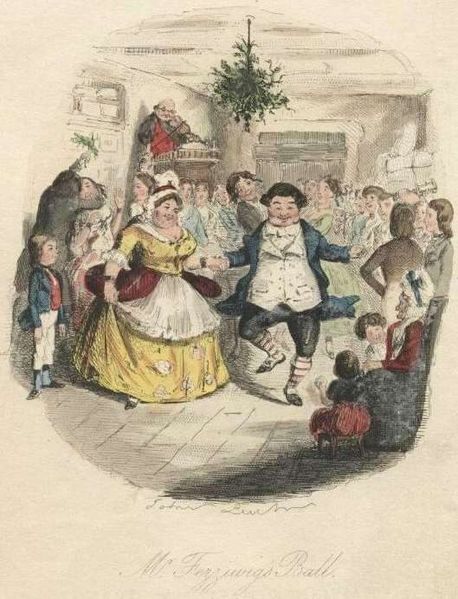
A Brief History of Christmas


I. Introduction
II. Centuries Before Christ and Christmas
III. History of Christmas
IV. Christmas Is A Natural Response for Believers
V. The Christmas Reformation
VI. Key Players in the Reformation
VII. Conclusion


Romans 14:5-6 KJV

Alternative/Supplemental Text Readings:

Romans 14:5-6 NIV
(5) One man considers one day more sacred than another; another man considers every day alike. Each one should be fully convinced in his own mind.
(6) He who regards one day as special, does so to the Lord. He who eats meat, eats to the Lord, for he gives thanks to God; and he who abstains, does so to the Lord and gives thanks to God.


Colossians 2:16-17 NIV
(16) Therefore do not let anyone judge you by what you eat or drink, or with regard to a religious festival, a New Moon celebration or a Sabbath day.
(17) These are a shadow of the things that were to come; the reality, however, is found in Christ.


Christmas is and has been a struggle. No age or period of time is free of debate about this subject. In reality, Christmas has been a struggle to allow Christian traditions and practices to shine brightly in worldly society. I want to discuss what Christmas has been and what Christmas has been becoming.

Centuries Before Christ and Christmas:

People have been celebrating life and rebirth during the winter months. This was and is a human infatuation with things that can endure and thrive during the cold winter months.

Before 600 B.C. Mithra was established. It was a celebration that ended up evolving into Indian, Roman and Islamic traditions. They all worshipped Mithra in unique ways. Mithra supposedly sacrificed himself for world peace.

Norse (early Scandinavian Vikings) Yule Log on Dec. 21 Winter Solstice. Set on fire largest log they could find. Each spark represented new life to be born in the spring. Evergreens. Only tree that could live through the bitter Norse winter.

Germans – Odin. Germans were terrified of him because he rode during the night deciding who would prosper and perish.

In 1652 Christmas outlawed by Oliver Cromwell in order to remove influence of the Church/State. 1656. The English signed a petition that if they could not have Christmas then they wanted to restore the monarchy. This happened with King Charles II came to the throne that year. 1659 in Boston, Puritans/Protestants had Christmas outlawed. The Jamestown Colony and even New Yorkers however continued the tradition with fervor. (they even drank eggnog)

History of Christmas:

Christmas has been and will always be an integral part of our Christian lives. It is the time of year that most of the world pauses to celebrate and commemorate the birth and incarnation of Jesus Christ. The man who orients our common calendar system of BC and AD. (“before Christ”; “anno domini – year of our Lord”)

Historian Phillip Schaff stated, “In the first place, no corresponding festival was presented by the Old Testament, as in the case of Easter and Pentecost. In the second place, the day and month of the birth of Christ are nowhere stated in the gospel history, and cannot be certainly determined.”(Schaff's History of the Church)

The Scriptures do not reveal the exact date of Christ's birth, and the earliest Christians had no fixed time for observing it. It was not until the late fourth century that Christmas was generally celebrated in churches. Even then they differed on dates in different locations. It was typically called the Feast of the Nativity. Some abhorred the practice still.

Various methods were used in an attempt to compute the day of Christ's birth; among dates suggested by early church leaders were January 2, April 18, April 19, May 20, and December 25.

December 25 eventually became the officially recognized date for Christmas because it coincided with the pagan festivals celebrating Saturnalia and the winter solstice—a time when the sun is the farthest from the equator. The early church thereby offered Christmas on December 25 as a Christian alternative to the pagan festivities that were active simultaneous in their society.

Many in the church eventually reinterpreted many of their symbols and actions in ways acceptable to the Christian faith and practice. Not all are pagan in origin or practice.

For example, Jesus Christ was presented as the Sun of Righteousness (Mal. 4:2) therefore replacing the sun god, Sol Invictus.

Christians introduced Holly to symbolize the crown of thorns that were placed upon Christ’s brow. Christians also introduced singing of carols and the nativity crib being used in Christmas traditions. Poinsettia. This flower was introduced in 1828 to the USA by Joel Roberts Poinsett, the first US Ambassador to Mexico. It has been adapted into our Christmas traditions.

Christmas Cards: invented in England in 1843 by the J.C. Horsley Company.

Santa Claus: American invention really. He is a figure created mainly by the work of Clement C. Moore—an Episcopal minister. In 1822 he wrote a poem called, “A Visit from Saint Nicholas”. In the poem he introduced the idea of St. Nick coming down the chimney and gave gifts to all the children.

Moore possibly hid his authorship at first possibly because his poem actually integrated Christian and non-Christian customs. From this emerged who we call Santa Claus.

St. Nicholas – was a bishop in the Greek Orth. Church. On December 6th he would give gifts to all the children. Hollanders and the Dutch who migrated to North America called him Sinterklass. He wore a red cape, white cloths underneath, had a long white beard and would come to give gifts. The Norse and later German mythical figure called Odin who would ride on a white horse during the night place bad children in his red bag and giving presents to the good ones only.

Christmas Trees: a Norse or German invention as mentioned earlier. Besides bringing in the Yule Log they would bring in and decorate an Evergreen tree. For centuries, the Evergreen has symbolized life and rebirth because of its endurance of the hard winter cold.

Christians placed apples on the Evergreen Trees to convert the symbol to Christian meaning. The apples have since evolved into ornaments. Christmas Trees really hit English and American traditions when Queen Victoria married Prince Albert from Germany in 1839.

The royal families first Christmas included a Christmas Tree. It was actually noised all over England and soon became an English and American tradition.
Christmas Is A Natural Response for Believers:

It is my opinion, that regardless of Christmas history—as it relates to paganism or church history—Christmas is and still should be a time that we celebrate.

This is due to the overwhelming fact that as Christians, we would and should naturally select a time to celebrate the birth of the icon of our worship—Jesus Christ. It is a natural response from the followers of Christ to celebrate His birth, His resurrection, and His soon return.

The birth of Christ is compelling and demands recognition. The birth of Christ was from the womb of the Virgin Mary. Jesus Christ was God’s gift of eternal life to humanity…we should continue the spirit of giving of our time, our willingness, our affections, our love, and ourselves to Him and others.

The Christmas Reformation:

For the most part Christmas has resembled a carnival and a celebration. The ideas about Christmas that we enjoy today are recent in comparison to its overall celebration. The pagans found in the Norse, Germans, English have long celebrated during winter months. It was a hazardous time in some places.

In 1828 New York established its Police force because of the riotous celebrations that took place in years past.

In the early 19th Century, around December of each year, the streets of London would be flooded with celebrations and partying. Drunkenness and orgies were common. Typically a beggar or peasant was crowned King of Misrule. He would have his way as the lower class would bully the middle and higher classes.

Mankind was celebrating life and rebirth but had ignored that “the life” had come and had offered them “new birth”!

Key Players in the Reformation:

In the 19th Century were Washington Irving, Clement C. Moore and Charles Dickens profoundly impacted Christmas celebration in North America and parts of the world. America literally invented its own Christmas and possibly reinvented it for the rest of the world.

Many felt that Christmas was dying because of its rejection by Protestants and a general rejection of it because “nobody wanted to be like the British” anymore.

Charles Dickens's (explain nature of Dicken’s childhood and life) book A Christmas Carol, published in 1843, played a major role in reinventing Christmas as a holiday emphasizing family, goodwill, and compassion as opposed to community celebration and excess of vice like drinking.

In his book, Dicken’s writes about Ebenezer Scrooge (explain nature of Scrooge) who is eventually convinced to help others by the ghosts of Christmas past, present, and future. They succeed in showing Ebenezer, a middle class business owner, that helping others, being kind, and giving of yourself to others is what Christmas is all about.

In 1820’s several short stories by Washington Irving which appear in his The Sketch Book of Geoffrey Crayon and "Old Christmas", and by Clement Clarke Moore's 1822 poem A Visit From St. Nicholas (popularly known by its first line: Twas the Night Before Christmas). Irving's stories depicted harmony, warm-hearted holiday traditions he claimed to have observed in England. Although some argue that Irving invented the traditions he describes, they were widely imitated by his American readers.

The poem A Visit from Saint Nicholas popularized the tradition of exchanging gifts and seasonal Christmas shopping began to assume economic importance. In her 1850 book "The First Christmas in New England", Harriet Beecher Stowe includes a character who complains that the true meaning of Christmas was lost in a shopping spree.

Christmas was declared a United States Federal holiday in 1870, signed into law by President Ulysses S. Grant. Since that time it has become a marketing ploy. Even Santa became a ploy to sell toys. For years Macy’s and F.A.O. Schwartz have been using Santa in their stores to peddle their goods. Christmas is typically the largest annual economic stimulus for many nations.

Conclusion:

L.O. Baird said this, “May no gift be too small to give, nor too simple to receive, which is wrapped in thoughtfulness, and tied in love.”

Christmas today is generally carried out without pause or understanding that many of the traditions we participate in are not permanent, but are more of a recent invention. Commercialism and inventive marketing has created a unique Christmas culture in North America if nowhere else.

Christmas can serve to be a distraction. A distraction or a deflection by culture and the unregenerate of what Christmas should actually be about--Jesus Christ. Texts of Scripture such as Matthew 1:18 – 2:12, which contain the account of the Nativity and the virgin birth of our Lord, should be read at any of our traditionally Christmas celebrations. If not, we are overlooking and even neglecting the real reason for the season..

John 3:16 tells us that God gave the greatest gift because of His love. Not because of his greed or vice but because He loves those whom He has created and seeks intimacy with those who have believed upon Him. This is the message we must declare this to the world. God loved us so much that He entered our dimension, He became the uniquely born Son of God, so that our sins might be forgiven. So that we can live with Him in peace very soon.

11.29.2008

The King Who Will Exalt Himself

"The king will do as he pleases. He will exalt and magnify himself above every god and will say unheard-of things against the God of gods. He will be successful until the time of wrath is completed, for what has been determined must take place. He will show no regard for the gods of his fathers or for the one desired by women, nor will he regard any god, but will exalt himself above them all. Instead of them, he will honor a god of fortresses; a god unknown to his fathers he will honor with gold and silver, with precious stones and costly gifts. He will attack the mightiest fortresses with the help of a foreign god and will greatly honor those who acknowledge him. He will make them rulers over many people and will distribute the land at a price. "At the time of the end the king of the South will engage him in battle, and the king of the North will storm out against him with chariots and cavalry and a great fleet of ships. He will invade many countries and sweep through them like a flood. He will also invade the Beautiful Land. Many countries will fall, but Edom, Moab and the leaders of Ammon will be delivered from his hand. He will extend his power over many countries; Egypt will not escape. He will gain control of the treasures of gold and silver and all the riches of Egypt, with the Libyans and Nubians in submission. But reports from the east and the north will alarm him, and he will set out in a great rage to destroy and annihilate many. He will pitch his royal tents between the seas at the beautiful holy mountain. Yet he will come to his end, and no one will help him.

(Daniel 11:36-45 NIV)


Let's examine characteristics and identifying features of the future physical Antichrist. Feel free to post your thoughts or studies on this subject.

Some have suggested that the "king" who exalts himself in this excerpt from Daniel is actually referring only and literally to the historical figure Antiochus IV Epiphanes. There are some serious problems with this interpretation, even if taken strictly literal (which is supposed method of interpretation here).

Matthew 24:15 also says, "When ye therefore shall see the abomination of desolation, spoken of by Daniel the prophet, stand in the holy place, (whoso readeth, let him understand." KJV

It is not historically proven that the Abomination of Desolation has occurred. No such man has done what is prophetically required of him. No historical figure has set himself up in the temple, claimed to be God, and demand worship. Antiochus and others brought standards and other symbols in for worshiping other Gods like Jupiter.

D.S. Russell suggests the "king" or later "horn" is Antiochus as well, but also writes that "the human identity of this little horn is evidenced by its possession of human eyes and a mouth that speaks presumptuously."

Before we consider problems with that idea, I do recognize that there is also a spirit of Antichrist walking the world today. It is a spirit, as well, that has plagued many and still plagues many. I still contend though that this spirit, not of Christ but of the Devil, will be embodied or incarnated in a man who will serve as the physical anti-Christ who steps upon the Temple Mount and commits the Abomination of Desolation.

Biblical:


1. The historical data presented in Daniel 11: 36-45 are impossible to historically harmonize with Antiochus’ actual life.

2. This person, who exalts himself, will also be a ruler living in the last days themselves, immediately before the Second Coming (See v. 40). The Second Coming has not occurred since Christ has not appeared as He left, nor has He set up His millennial kingdom.

3. He is the same “horn” of Daniel 7:21 and the “ruler who will come” in Daniel 9:26.

Historical:

Traditional historic interpretation, like Chrysostom, Jerome, Theodoret, Leupold, Keil, Archer, Walvoord, suggest this person is a future antichrist. Even amillenialist Jerome stated, “Those of our persuasion believe all these things are spoken prophetically of the Antichrist who is to arise in the end time.” He also said that the Antichrist would be "one of the human race, in whom Satan will wholly take up his residence in bodily form."

The physical antichrist, the one in who satan will incarnate himself, will go well beyond anyone in history has ever done before. He will catch the rising tide of Secularism sweeping our globe and use its energy to create a new government. One without religion. Historical leaders who have sought to do similar things have been Antiochus himself, Nero, Domitian, Stalin and Hitler. The reign of the Antichrist will be one which will strive to be free of all religious vestiges.

NOTES:

The Jewish Study Bible—JPS TANAKH Translation. © 2004 by Oxford University Press, Inc.
Pťer-Contesse, R., & Ellington, J. (1993). A handbook on the Book of Daniel. UBS handbook series; Helps for translators (180). New York: United Bible Societies.
Russell, D. S. (2001, c1981). Daniel. The Daily study Bible series (141). Louisville: Westminster John Knox Press.
Jerome, Daniel, 129.
Jerome, Daniel, 77; cf. pp. 81–82.
__________________

Adversus Trinitas

"...unless you believe that I am he you will die in your sins." (John 8:24 ESV)