Showing posts with label Christmas. Show all posts

12.28.2011

Christmas Unto the Lord?


There is no day of the week which is not dedicated to the worship of a false God. Even Sunday was dedicated to the worship of a false God. What about all those Christians going to church on Sunday? Sabbatarians you don't get a break either becuase Saturday is just as dedicated to false pagan worship as Sunday. What is a believer to do? Go indoors and hide? No, let's not hide our light under a bushel. Just because some have set aside days for false worship doesn't mean we cannot redeem those days for the Lord. Satan does not own any day of the week. Every day on the calendar belongs to God as part of his "good" creation. Not the pagan or even Satan.

Even pagans have used musical tunes and hymns since ancient times. Does this mean we can't use musical tunes or hymns? Of course not. This is the genetic fallacy. Abuse or improper used doesn't mean disuse. We do not use musical tunes and hymns to glorify a fictional deity rather we use them in a redeeming CORRECT way. The vibration of every note played or sung belongs to the Lord. Some Christians surrender God's creation to Satan and pagans. It's as though that day cannot be taken from the clutch of the pagan's grasp.

Pagans even used temples possibly prior and contemporaneously with the Hebrews who also used  temples. Using the logic of those who give the days and music to Satan the Hebrews shouldn't have used a temple. Again, this is the genetic fallacy. We never read of any condmenation of any such thing in the Scriptures. We should just go with the words of Paul here:
Romans 14:5-9, One person esteems one day as better than another, while another esteems all days alike. Each one should be fully convinced in his own mind. 6 The one who observes the day, observes it in honor of the Lord. The one who eats, eats in honor of the Lord, since he gives thanks to God, while the one who abstains, abstains in honor of the Lord and gives thanks to God. 7 For none of us lives to himself, and none of us dies to himself. 8 For if we live, we live to the Lord, and if we die, we die to the Lord. So then, whether we live or whether we die, we are the Lord’s. 9 For to this end Christ died and lived again, that he might be Lord both of the dead and of the living. ESV
No day on the calendar irredeemably belongs to Satan. This seems to be what the anti-Christmas crowd suggests. At Christmas time people are open, possibly more than ever, to recieve our testimony as believers. We should not miss this great opportunity any more than we would wish to miss them any other day of the year.

In attempting to get away from pagan idolatry some isoloate themselves from God and the world they have been sent into to disciple. Essentially, they lose and gain nothing. Be true to your convictions but do not isolate yourself like the Jehovah's Witness during this time (they also do not celebrate birthdays). We should find something important and significant for our families to do during these times. Christians should take these days back to the honor and glory of the Lord. Celebrating the birth of Christ and outreach to the world is a great way to do that very thing.

12.11.2011

Andreas Kostenberger from Biblical Foundations: When Was Jesus Born, and When Did He Die?

Christians celebrate Christmas and Easter every year, but few know when Jesus was actually born and when he died. Not that any great doctrine rests on the calculations below, but it sure is nice that we can have reasonable confidence that the dates of Jesus’ birth and death are secure and can be gleaned from a combination of biblical and extrabiblical historical data. I may not be willing to stake my life on the accuracy of the data below, but I am confident enough of these calculations that the license plate of my van reads as follows: 5BC–AD33. So here you go:

Jesus’ birth most likely took place in late November of 5 B.C. (the most authoritative treatment of which I am aware is Paul L. Maier, “The Date of the Nativity and the Chronology of Jesus’ Life,” in Chronos, karios, Christos: Nativity and Chronological Studies Presented to Jack Finegan [ed. J. Vardaman and E. M. Yamauchi; Winona Lake, IN: Eisenbrauns, 1989], 113–30). This, incidentally, would allow enough time for Jesus to be born and for Herod (who died in 4 B.C.) to mount his campaign to have all the boys two years old and under in Bethlehem and vicinity killed (see Matt 2:16, 19).

Jesus’ crucifixion probably occurred on Friday, April 3, A.D. 33. Luke 3:1–3 tells us that John the Baptist, Jesus’ forerunner, began his ministry “in the 15th year of the reign of Tiberius Caesar.” Both Roman historians Tacitus (Annales 4 §4) and Suetonius (Tiberius 73) date the beginning of Tiberius’s reign at A.D. 14 (the precise date is August 19, the day of Emperor Augustus’s death). Hence the 15th year of Tiberius’s reign, counting from August 19, A.D. 14, brings us to A.D. 29 (14 + 15 = 29).

According to Luke 3:23, Jesus was “about 30 years old” when he began his ministry. If Jesus was born in 5 B.C. (as argued above) and began his ministry, as is indicated by all four Gospels, shortly after that of John the Baptist (that is, in the latter part of the year A.D. 29), this would mean that Jesus was about 33 years old when he began his public ministry (see H. W. Hoehner, Chronological Aspects of the Life of Christ [Grand Rapids: Zondervan, 1977], 31–37 and B. Messner, “’In the Fifteenth Year’ Reconsidered: A Study of Luke 3:1,” Stone-Campbell Journal 1 [1998]: 201–11).

John’s Gospel records Jesus’ appearance at at least 3 Passovers: (1) in Jerusalem (2:13, 23); (2) in Galilee (6:4); and (3) again in Jerusalem (11:55; 12:1). In addition, it is likely that he attended a fourth Passover not recorded in John but recorded in the Synoptics (Matt 12:1 pars.?). This adds up to a length of about 3 ½ years for Jesus’ ministry. If he began his ministry in late A.D. 29, this brings us to A.D. 33 for the crucifixion. It so happens that because of astronomical calculations A.D. 30 and 33 are the only possible dates for Jesus’ crucifixion as far as the date of Passover in these two years is concerned (for the dating of the four Passovers in question see esp. C. J. Humphreys and W. G. Waddington, “The Jewish Calendar, a Lunar Eclipse, and the Date of Christ’s Crucifixion,” Tyndale Bulletin 43 [1992]: 331–51, esp. 335).

Finally, John 2:20 says that the temple was completed 46 years ago (see for this translation A. J. Köstenberger, John [BECNT; Grand Rapids: Baker, 2004], 109–10). According to Josephus, the renovation of the temple building proper started in 20/19 B.C. (Antiquities 15.11.1 §380), with completion 18 months later in 18/17 B.C. (Antiquities 15.11.6 §421). Again, counting from 18/17 B.C., adding 46 years brings us to A.D. 29 (there was no year zero)—a great way to check our math above!

For Further Study: See the chart in A. J. Köstenberger, John (BECNT; Grand Rapids: Baker, 2004), 11–13, and commentary at 1:19 and 2:20, and the previous post on Johannine chronology here. See also H. W. Hoehner, “Chronology,” in Dictionary of Jesus and the Gospels (ed. J. B. Green, S. McKnight, and I. H. Marshall; Downers Grove, IL: InterVarsity, 1992), 118–22. Also, http://www.biblicalfoundations.org/c...th-c-l-quarles.

The Spanish translation of this post can be found here: http://fundamentosbiblicos.com/

Click here to read from Biblical Foundations website.

12.22.2008

A Brief History of Christmas


I. Introduction
II. Centuries Before Christ and Christmas
III. History of Christmas
IV. Christmas Is A Natural Response for Believers
V. The Christmas Reformation
VI. Key Players in the Reformation
VII. Conclusion


Romans 14:5-6 KJV

Alternative/Supplemental Text Readings:

Romans 14:5-6 NIV
(5) One man considers one day more sacred than another; another man considers every day alike. Each one should be fully convinced in his own mind.
(6) He who regards one day as special, does so to the Lord. He who eats meat, eats to the Lord, for he gives thanks to God; and he who abstains, does so to the Lord and gives thanks to God.


Colossians 2:16-17 NIV
(16) Therefore do not let anyone judge you by what you eat or drink, or with regard to a religious festival, a New Moon celebration or a Sabbath day.
(17) These are a shadow of the things that were to come; the reality, however, is found in Christ.


Christmas is and has been a struggle. No age or period of time is free of debate about this subject. In reality, Christmas has been a struggle to allow Christian traditions and practices to shine brightly in worldly society. I want to discuss what Christmas has been and what Christmas has been becoming.

Centuries Before Christ and Christmas:

People have been celebrating life and rebirth during the winter months. This was and is a human infatuation with things that can endure and thrive during the cold winter months.

Before 600 B.C. Mithra was established. It was a celebration that ended up evolving into Indian, Roman and Islamic traditions. They all worshipped Mithra in unique ways. Mithra supposedly sacrificed himself for world peace.

Norse (early Scandinavian Vikings) Yule Log on Dec. 21 Winter Solstice. Set on fire largest log they could find. Each spark represented new life to be born in the spring. Evergreens. Only tree that could live through the bitter Norse winter.

Germans – Odin. Germans were terrified of him because he rode during the night deciding who would prosper and perish.

In 1652 Christmas outlawed by Oliver Cromwell in order to remove influence of the Church/State. 1656. The English signed a petition that if they could not have Christmas then they wanted to restore the monarchy. This happened with King Charles II came to the throne that year. 1659 in Boston, Puritans/Protestants had Christmas outlawed. The Jamestown Colony and even New Yorkers however continued the tradition with fervor. (they even drank eggnog)

History of Christmas:

Christmas has been and will always be an integral part of our Christian lives. It is the time of year that most of the world pauses to celebrate and commemorate the birth and incarnation of Jesus Christ. The man who orients our common calendar system of BC and AD. (“before Christ”; “anno domini – year of our Lord”)

Historian Phillip Schaff stated, “In the first place, no corresponding festival was presented by the Old Testament, as in the case of Easter and Pentecost. In the second place, the day and month of the birth of Christ are nowhere stated in the gospel history, and cannot be certainly determined.”(Schaff's History of the Church)

The Scriptures do not reveal the exact date of Christ's birth, and the earliest Christians had no fixed time for observing it. It was not until the late fourth century that Christmas was generally celebrated in churches. Even then they differed on dates in different locations. It was typically called the Feast of the Nativity. Some abhorred the practice still.

Various methods were used in an attempt to compute the day of Christ's birth; among dates suggested by early church leaders were January 2, April 18, April 19, May 20, and December 25.

December 25 eventually became the officially recognized date for Christmas because it coincided with the pagan festivals celebrating Saturnalia and the winter solstice—a time when the sun is the farthest from the equator. The early church thereby offered Christmas on December 25 as a Christian alternative to the pagan festivities that were active simultaneous in their society.

Many in the church eventually reinterpreted many of their symbols and actions in ways acceptable to the Christian faith and practice. Not all are pagan in origin or practice.

For example, Jesus Christ was presented as the Sun of Righteousness (Mal. 4:2) therefore replacing the sun god, Sol Invictus.

Christians introduced Holly to symbolize the crown of thorns that were placed upon Christ’s brow. Christians also introduced singing of carols and the nativity crib being used in Christmas traditions. Poinsettia. This flower was introduced in 1828 to the USA by Joel Roberts Poinsett, the first US Ambassador to Mexico. It has been adapted into our Christmas traditions.

Christmas Cards: invented in England in 1843 by the J.C. Horsley Company.

Santa Claus: American invention really. He is a figure created mainly by the work of Clement C. Moore—an Episcopal minister. In 1822 he wrote a poem called, “A Visit from Saint Nicholas”. In the poem he introduced the idea of St. Nick coming down the chimney and gave gifts to all the children.

Moore possibly hid his authorship at first possibly because his poem actually integrated Christian and non-Christian customs. From this emerged who we call Santa Claus.

St. Nicholas – was a bishop in the Greek Orth. Church. On December 6th he would give gifts to all the children. Hollanders and the Dutch who migrated to North America called him Sinterklass. He wore a red cape, white cloths underneath, had a long white beard and would come to give gifts. The Norse and later German mythical figure called Odin who would ride on a white horse during the night place bad children in his red bag and giving presents to the good ones only.

Christmas Trees: a Norse or German invention as mentioned earlier. Besides bringing in the Yule Log they would bring in and decorate an Evergreen tree. For centuries, the Evergreen has symbolized life and rebirth because of its endurance of the hard winter cold.

Christians placed apples on the Evergreen Trees to convert the symbol to Christian meaning. The apples have since evolved into ornaments. Christmas Trees really hit English and American traditions when Queen Victoria married Prince Albert from Germany in 1839.

The royal families first Christmas included a Christmas Tree. It was actually noised all over England and soon became an English and American tradition.
Christmas Is A Natural Response for Believers:

It is my opinion, that regardless of Christmas history—as it relates to paganism or church history—Christmas is and still should be a time that we celebrate.

This is due to the overwhelming fact that as Christians, we would and should naturally select a time to celebrate the birth of the icon of our worship—Jesus Christ. It is a natural response from the followers of Christ to celebrate His birth, His resurrection, and His soon return.

The birth of Christ is compelling and demands recognition. The birth of Christ was from the womb of the Virgin Mary. Jesus Christ was God’s gift of eternal life to humanity…we should continue the spirit of giving of our time, our willingness, our affections, our love, and ourselves to Him and others.

The Christmas Reformation:

For the most part Christmas has resembled a carnival and a celebration. The ideas about Christmas that we enjoy today are recent in comparison to its overall celebration. The pagans found in the Norse, Germans, English have long celebrated during winter months. It was a hazardous time in some places.

In 1828 New York established its Police force because of the riotous celebrations that took place in years past.

In the early 19th Century, around December of each year, the streets of London would be flooded with celebrations and partying. Drunkenness and orgies were common. Typically a beggar or peasant was crowned King of Misrule. He would have his way as the lower class would bully the middle and higher classes.

Mankind was celebrating life and rebirth but had ignored that “the life” had come and had offered them “new birth”!

Key Players in the Reformation:

In the 19th Century were Washington Irving, Clement C. Moore and Charles Dickens profoundly impacted Christmas celebration in North America and parts of the world. America literally invented its own Christmas and possibly reinvented it for the rest of the world.

Many felt that Christmas was dying because of its rejection by Protestants and a general rejection of it because “nobody wanted to be like the British” anymore.

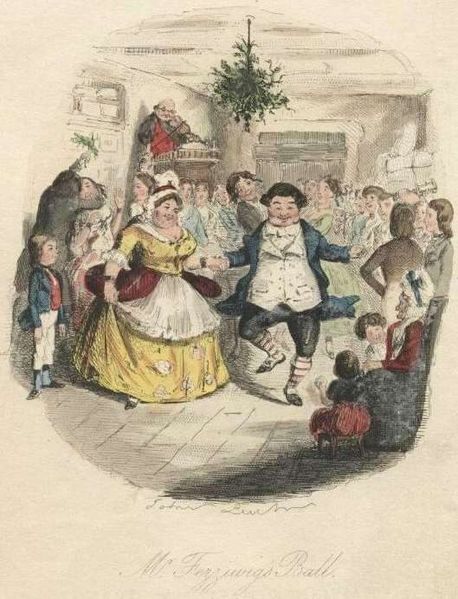
Charles Dickens's (explain nature of Dicken’s childhood and life) book A Christmas Carol, published in 1843, played a major role in reinventing Christmas as a holiday emphasizing family, goodwill, and compassion as opposed to community celebration and excess of vice like drinking.

In his book, Dicken’s writes about Ebenezer Scrooge (explain nature of Scrooge) who is eventually convinced to help others by the ghosts of Christmas past, present, and future. They succeed in showing Ebenezer, a middle class business owner, that helping others, being kind, and giving of yourself to others is what Christmas is all about.

In 1820’s several short stories by Washington Irving which appear in his The Sketch Book of Geoffrey Crayon and "Old Christmas", and by Clement Clarke Moore's 1822 poem A Visit From St. Nicholas (popularly known by its first line: Twas the Night Before Christmas). Irving's stories depicted harmony, warm-hearted holiday traditions he claimed to have observed in England. Although some argue that Irving invented the traditions he describes, they were widely imitated by his American readers.

The poem A Visit from Saint Nicholas popularized the tradition of exchanging gifts and seasonal Christmas shopping began to assume economic importance. In her 1850 book "The First Christmas in New England", Harriet Beecher Stowe includes a character who complains that the true meaning of Christmas was lost in a shopping spree.

Christmas was declared a United States Federal holiday in 1870, signed into law by President Ulysses S. Grant. Since that time it has become a marketing ploy. Even Santa became a ploy to sell toys. For years Macy’s and F.A.O. Schwartz have been using Santa in their stores to peddle their goods. Christmas is typically the largest annual economic stimulus for many nations.

Conclusion:

L.O. Baird said this, “May no gift be too small to give, nor too simple to receive, which is wrapped in thoughtfulness, and tied in love.”

Christmas today is generally carried out without pause or understanding that many of the traditions we participate in are not permanent, but are more of a recent invention. Commercialism and inventive marketing has created a unique Christmas culture in North America if nowhere else.

Christmas can serve to be a distraction. A distraction or a deflection by culture and the unregenerate of what Christmas should actually be about--Jesus Christ. Texts of Scripture such as Matthew 1:18 – 2:12, which contain the account of the Nativity and the virgin birth of our Lord, should be read at any of our traditionally Christmas celebrations. If not, we are overlooking and even neglecting the real reason for the season..

John 3:16 tells us that God gave the greatest gift because of His love. Not because of his greed or vice but because He loves those whom He has created and seeks intimacy with those who have believed upon Him. This is the message we must declare this to the world. God loved us so much that He entered our dimension, He became the uniquely born Son of God, so that our sins might be forgiven. So that we can live with Him in peace very soon.

12.19.2006

You Can Give A Gift That Will Not Cost You A Penny!


But the end of all things is at hand: be ye therefore sober, and watch unto prayer. And above all things have fervent charity among yourselves: for charity shall cover the multitude of sins. Use hospitality one to another without grudging. As every man hath received the gift, [even so] minister the same one to another, as good stewards of the manifold grace of God. (1 Peter 4:7-10 KJV)


As each one has received a gift, minister it to one another, as good stewards of the manifold grace of God. (1 Peter 4:10 NKJV)


Some time ago, I was preparing to speak to a group of people at a Christmas dinner. I had a book about Christmas (I cannot find or recall the name, will repost later) at that time and came across the premise for this post.


In the text above, the word "gift" is charisma, in the N.T. Greek; it means "endowment" of any kind, but especially that given by the Holy Spirit. In our text, it seems to refer to every kind of endowment by which we can do good to others. It does not refer here particularly to the ministry of the word, though it is applicable to that, and includes that, but to all the gifts and graces by which we can contribute to the welfare of others.


Christmas should inproportionately focus upon Christ and giving. In fact, Christ is THE GIFT from God to mankind. Today, the value of gifts monetarily is of great concern and every wife knows the pressure of the season as she starts her shopping journey. Paradoxical to our societal norms rests gifts that really have no monetary value, but are rooted in metaphysical things that change hearts and lives.


The Gift of Listening: This gift truly requires one to listen not just to daydream or plan a response. Listening requires your full attention, to attend closely. Listen to your loved ones. Listen to God.


The Gift of Affection: Affectionate means to be tender; attached; loving; devoted; warm; fond; earnest; and ardent. Your affection to a loved one can be the best gift given. Express your affection to your Savior—be devoted and earnest in our prayer.


The Gift of Laughter: Modern Science has labeled laughter as a natural high. In a recent article in Newsweek Magazine, scientist discovered that laughter activates the same portion of the brain as cocaine. The bible states, "A time to weep, and a time to laugh; a time to mourn, and a time to dance;" (Ecclesiastes 3:4 KJV)


The Gift of a Written Note: This gift can be a short poem or a letter expressing your feelings to a loved one. Many times brief, hand written notes are remembered for a long time.


The Gift of a Compliment: Complimenting or recognizing someone for their kind deeds, performance, or looks can alter that persons perspective of themselves as well as brighten their day. Heaviness in the heart of man maketh it stoop: but a good word maketh it glad. (Proverbs 12:25 KJV)


The Gift of a Favor: Or the gift of a good deed. It is the gift of going out of your way to do something kind. The Golden Rule: Therefore all things whatsoever ye would that men should do to you, do ye even so to them: for this is the law and the prophets. (Matthew 7:12 KJV)


The Gift of Solitude: There are times when some only want to be left alone. Our gift is to allow or discern those times and willingly give solitude or alone time to that person.


The Gift of a Cheerful Disposition: Be kind and be cheerful. This involves how we act and speak. Expect good things from people and be cheerful to them.


L.O. Baird said this, “May no gift be too small to give, nor too simple to receive, which is wrapped in thoughtfulness, and tied in love.” Jesus Christ was God’s gift of eternal life to humanity…we should continue the spirit of giving our time, our willingness, our affections, our love, and ourselves to Him and others.

Christmas Musings:


Christmas has been and always will be an integral part of our Christian lives. It is the time of year when much of the world pauses to celebrate and commemorate the birth and incarnation of Jesus Christ. The very man who's life impacted our status in life, our spirit lives, our calendaring system, who's name is known throughout most of the world, who's book is read by millions, and has a following of billions since his birth.

A read of History of the Christian Church by Phillip Schaff will show us the journey of Christmas. The Scriptures, themselves, do not explicitly reveal the exact date of Christ's birth; the earliest Christians had no fixed time for observing it as well. However, by the late fourth century Christmas was generally celebrated in the churches, although on differing dates in different locales. Various methods were used in an attempt to compute the day of Christ's birth; among dates suggested by early church leaders were January 2, April 18, April 19, May 20, and December 25.

December 25 eventually became the officially recognized date for Christmas because it coincided with the pagan festivals celebrating Saturnalia and the winter solstice—a time when the sun is the farthest from the equator. The early church thereby offered Christmas on December 25 as a Christian alternative to the pagan festivities that were active simultaneous in their society. Many in the church eventually reinterpreted many of their symbols and actions in ways acceptable to the Christian faith and practice. Many Christians, today, do similar things annually with Halloween by having Harvest Festivals and etc.

Some of the Christmas re-interpretations have very obvious affinities. For example, Jesus Christ was presented as the Sun of Righteousness (Mal. 4:2) therefore replacing the sun god--Sol Invictus. As Christianity spread throughout Europe, it assimilated into its observances many customs of the pagan winter festivals such as holly, mistletoe, the Christmas tree, and log fires. At the same time, Christians introduced new Christmas customs such as the nativity crib and the singing of carols.

In every period of Christian history, a minority of Christian leaders have opposed the observance of Christmas. Usually there are one or more of three reasons for this objection. A rejection of ecclesiastical or church authority in its attempt to establish official feast days, of which Christmas is one. An objection to the drinking, partying, and immorality associated in every age with Christmas festivities. The long-standing and continuing associations of Christmas with pagan religious ideas and practices. Some Protestants, especially those in the Calvinistic tradition, including Calvin himself, the English and American Puritans, and many Presbyterians, refused to celebrate Christmas. However, the Lutherans, the continental Reformers and most other Protestants defended the observance of Christmas and sought to emphasize its deeper truth expressed in the doctrine of the incarnation. By the mid-twentieth century, Christmas had come to be observed almost universally in some form or another by Christians throughout the world. With the expansion of Christianity into the cultures of Africa, Asia, and Latin America, many new customs and ideas were incorporated into the Christian celebration of Christmas. (1)

It is my humble opinion, that regardless of Christmas history—as it relates to paganism or church history—Christmas is and still should be a time that we celebrate. This is due to the overwhelming fact that as Christians, we would and should naturally select a time to celebrate the birth of the icon of our worship, i.e. Jesus Christ. It is a natural response from the followers of Christ to celebrate His birth, His resurrection, and His soon return. In what detail we celebrate Christmas is somewhat arbitrary. I feel that the focus, as many realize, should be inproportionately centered upon Jesus Christ. This holiday should be one that exalts the giver of life and not the earthly gifts wrapped in paper and ribbon.

The once atheist turned Christian, and author of The Case for Christmas--Lee Strobel--has been a great blessing to the Christian community in advancing and evangelizing basic theistic concepts to the masses, especially to the gnostic and athiestic community. He recently wrote this note:

"Interest in the story of Jesus’ birth has been heightened this Christmas season with The Nativity Story, a major motion picture that follows the contours of the biblical account. This has meant a lot of discussion in the media about the facts surrounding the Incarnation. So here are four common questions about Christmas and some answers that I hope will be helpful to you. In the meantime, I trust you and your family will have a wonderful Christmas season!"

Click here tofind out more about Christmas from Lee Strobel.


Notes:

1. Evangelical Dictionary of Theology (C) Copyright 1984, by Baker Book House Company.

Adversus Trinitas

"...unless you believe that I am he you will die in your sins." (John 8:24 ESV)