7.09.2007

Exploring the Book of Jonah

The NIV titles each section of the book of Jonah. We shall work from these general titles to formulate a coherent understanding of each. First, Jonah Flees from the Lord. The son of Amattai flees a call from God to evangelize Nineveh the capital of the Assyrians--considered heathens by the Jews. After attempting a voyage away from God Jonah finds himself in the belly of a fish for three days and three nights.


Second, Jonah's Prayer from the Belly of the Fish. In obvious consternation Jonah seeks out the divine right of prayer. The overwhelming threat before Jonah causes him to conclude that God has "banished" him (2:4). In spite of that he continue to pray and pledge his "song of thanksgiving" (2:9). Miraculously the fish vomits Jonah onto dry land.


Third, Jonah Goes to Nineveh. The Lord told Jonah, a second time, to go to Nineveh but this time Jonah's obeys God's command. Wasting no time, "on the first day", Jonah proclaims that Nineveh will be "overturned" by God. The Ninevites believe and make humble obeisance. God responds with "compassion and did not bring upon them the destruction he had threatened." (3:9).


Fourth, Jonah's Anger at God's Compassion. The turning of Nineveh did not please Jonah. In a childish manner, possibly, Jonah goes away and sits "east of the city" to "see what would happen to the city." God causes a vine to grow and shelter Jonah from the heat. This makes Jonah "very happy". Yet, as quick as the vine was alive it died by the worm. This disturbed Jonah, but ironically, the fate of over 120,000 people did not. God tells Jonah that he has great cause to "be concerned about that great city."


Jonah 1:13-16: Contextual Analysis

Jonah, the son of Amittai, was chosen by God and God spoke a command to "go" to Nineveh. Interestingly enough, Christ would later utter this same word, in the Greek NT, in fulfillment of the Great Commission (Matthew 28:19). Initially, the transgressions of the Ninevites are not explored. The text gives Jonah a simple command to go to Nineveh and "preach against it" because of its wickedness that has ascended before God.


In hopes of escaping the divine edict Jonah finds himself aboard a vessel that was destined for a storm and would later find himself in a fish's belly. Amidst this storm utter chaos has broken out yet Jonah was, as was Christ in the Gospels during a storm at sea as well, asleep in the hull of the ship.


While using the tradition of "casting lots" the responsibility of fault rests accurately upon Jonah. This may not be too coincidental since Jonah had already told them he was running from the Lord (vs. 10). They question, "Tell us, who is really responsible..." Personal introspective questions follow that actually seek Jonah's religious persuasion. After hearing that he was a Hebrew the fellow voyagers became "terrified" and they began to as "What have you done?" This and subsequent responses might indicate that these voyagers held high regard for the Hebrew God.


After the voyagers desperately search for a solution, Jonah finally tells them to "throw him into the sea." Possibly reserving Capital Punishment for a later time the voyages continue to "row back to land", in vain hopes however. Ironically, these men who possibly worshipped other gods began to call on the Hebrew God and crying "O Lord" because they did not wish to be accountable for killing an innocent man. This portion of the text also has some Christological affinity. For example, the crucifixion of Christ contains Pilate washing his hands in hopes of removing the blood of the innocent--as were these voyagers.


After throwing Jonah overboard the "sea grew calm." Because of this the voyagers made vows and sacrifices to the Lord. In further Christological fashion, Jonah is in the belly of the fish (seemingly certain death) for three days.

Haggai: Four Short Sermons for a Wayward People:

Dr. Gleason Archer, very early in his survey of the OT book of Haggai, notes that “of all the books of the Old Testament, this one enjoys the unusual status of being uncontested by all critics of every persuasion. It is acknowledged to be the work of the prophet Haggai himself, and the date it assigns to each message is accepted as reliable.” The book of Haggai then is an exceptional corpus of writings.

The prophet Haggai, himself, was the tenth, in natural order, of the Minor Prophets yet he is the first to have prophesied after Israel’s captivity. Scholars are unsure, however, of the tribe, parentage, history and tradition of Haggai as a person. The name Haggai itself means “festival”. Some conclude that this may refer to Haggai possibly being born on Passover or some popular festival in Old Testament worship.

When the ruler of the Persian Empire, Cambysses, mysteriously dies while in Egypt in 522 B.C., one of his generals, Darius, replaces him. In the same year of this political and historical transition God had a plan for two prophets. Dr. James Smith notes that God “raised up two prophets, Haggai and Zechariah. In August of 520 b.c. Haggai preached a blistering sermon in which he challenged the people of Judea to build God’s temple. The work resumed immediately. Three other messages of Haggai are recorded. All were delivered before the end of the year 520 b.c.. Just before Haggai delivered his last oracle, Zechariah was called to deliver his first message. He too focused on the work of temple building.”

Gleason and Smith suggest that the theme of his prophetic book is about rebuilding the Temple or keeping His program and house then God will prosper them. Haggai contains 38 verses of text, making it second only to Obadiah in brevity.

The ministry of Haggai lasted only four months, which Smith dates from “late August to mid-December of 520 b.c.” As was Zechariah, Haggai’s focus was on the building of the temple almost exclusively. At the arrival of Haggai the building of the Temple had been in an impasse for at least fifteen years. Smith also suggests that, “In six months Haggai accomplished more than any other Old Testament prophet. He was “a steam-engine in trousers” (Pfeiffer). By the time he retired or died, the work of reconstructing the house of God was well under way.

Gleason suggests a basic structure for the sermons in Haggai. We will use his model as a basic example. The first sermon, in 1:1-15, includes Haggai condemning the people for neglect. This very neglect was the very “cause of economic depression.” The second sermon, in 2:1-9, although less dramatic, is a prophecy that the “second temple will be more glorious than the first.” The third sermon, in 2:20-23, is a declaration that un-holiness contaminates sacrifice and that “selfishness leads to crop failure.” The latter occurs during the third in 2:10–19. The fourth sermon, in 2:20-23, is a glorious message that “God will finally triumph.

1. Archer, G. L. (1998, c1994). A survey of Old Testament introduction (3rd. ed.].) (469). Chicago: Moody Press.

2. Smith, J. E. (1992). The Minor Prophets. Joplin, Mo.: College Press.

6.27.2007

John 14:31: Understanding the Enigma


The Farewell Discourse (FD heron) is popularly known as being 13:31 – 14:31 of John’s Gospel. D.A. Carson concludes[1] that the discussion concerning the FD encompasses a portion of scripture that has been both a “favorite passage for Christians” for “study and meditation” as well as “considerable debate.” As F.F. Bruce points out,[2] the debate has arisen from certain textual arrangements made by earlier translators of the texts, one being James Moffatt. His unique arrangements are found in his translation of the NT and possibly his commentaries on the Gospel of John. Moffatt held that chapters 15 and 16 were to be placed in the middle of 13:31.

The major challenge in textual structure relates then to the closing remarks of Christ in 14:31, “Arise, let us go from here” (NKJV). These words have proven to be enigmatic for many (hereon this phrase will be referenced as the “Enigma”). Determining the textual relevance or relationship of the data before and after that break is what remains pertinent to the minds of students. “The common response throughout the church’s history has been that the first two chapters, John 13-14, are set in the upper room, while chapters 15-17 continue the dialogue along the road to the Mount of Olives, culminating in the prayer of John 17.”[3]

Many interpret the Enigma in a way that it only has spiritual meaning; possibly akin to “arise, let us march to meet the prince of this world” (See Carson here). I do not hold this view and therefore do not see the Enigma phrase as being a pure theological statement. It is plausible “to regard the remainder of the discourse as taking place in the open air, although in 18:1 Jesus is said to have ‘left’ with his disciples, and it would be necessary to suppose that chs. 15–17 were uttered on the way to the Kidron Valley… Some have supposed that ch. 14 should follow ch. 17, but there is no evidence for such rearrangement. The only other alternative is to suppose that 14:31 implied an intention which was fulfilled some time later. On the whole the first suggestion is fraught with the least difficulties.”[4]

After uttering the Enigma it is also plausible that Jesus simply stood up (the disciples may or may not have stood with him) to finish the discourse before finally departing (in John 18:1), but the disciples lingered and conversation continued. Leon Morris “suggests it is possible that the group probably was slow in making its departure and so Jesus continued to teach them in the room. But he prefers the proposal of Lightfoot that it is a “stage in the teaching.”192I believe it plausible but unlikely that Christ was uttering a spiritual command to get up and prepare “to meet the enemy who is on the way already in the person of Judas and the soldiers with him.”[5]

Borchert states that the “view of speaking en route offers a difficulty that a walking band is hardly a conducive setting for communicating major segments of teaching.” He goes on to advocate that, “total rearrangement theories make the contemporary restructuring person wiser than the original writer and means that the present order is a purposeless collection of writings. However one seeks to solve the problem, I refuse to accept any theory that proposes that the logic of this tightly knit argument is to be disturbed by rearrangement.”[6]

My conclusion seems to be shared, at least in part, gree with that of Carson when he states, “it is possible that Jesus and his disciples did not in fact leave until after John 17. Anyone who has frequently invited home ten to twenty graduate students knows how common it is, after someone has announced it is time to go, for another half hour to slip past before anyone makes a serious move to leave.”

Good reason for this delay could stem from Christ’s earlier statements. Consider:

“before the Feast of the Passover, when Jesus knew that His hour had come that He should depart from this world to the Father, having loved His own who were in the world, He loved them to the end.” (John 13:1 NKJV)


NOTES:

[1] Carson, D.A. Pillar New Testament Commentary, The Gospel According to John. © 1991 Eerdman Publishing pg. 476

[2] F. F. Bruce, The Gospel and Epistles of John, (Grand Rapids: Wm. B. Eerdmans, 1983, reprint 2004) pg. 292

[3] Carson, D.A. Pillar New Testament Commentary, The Gospel According to John. © 1991 Eerdman Publishing pg. 477

[4]Carson, D. A. (1994). New Bible commentary : 21st century edition. Rev. ed. of: The new Bible commentary. 3rd ed. / edited by D. Guthrie, J.A. Motyer. 1970. (4th ed.) (Jn 14:1). Leicester, England; Downers Grove, Ill., USA: Inter-Varsity Press.

[5] THE NET BIBLE®, New English Translation Bible Notes, John 14:31

[6]Borchert, G. L. (2002). Vol. 25B: John 12-21. The new American commentary, New International Version (136). Nashville: Broadman & Holman.

6.12.2007

The Miraculous Messiah of the Fourth Gospel:


The ministry of Christ is very much concerned with the miraculous, supernatural events. People were often "amazed" by the acts of Christ. In fact, “the Gospels record a total of thirty-five separate miracles.”[1] In the Gospel of John, the very first miracle was the turning of water into wine, as recorded in 2:1–10. John wrote that the miracles performed by Christ, were “miraculous signs” (2:11) or just “signs” (NKJV). The Fourth Gospel has no deficiency in the presence of the miraculous. The miraculous happenings of Christ are only further evidences of an authentic Messiah. These evidences serve to identify Him as the Christ or "anointed one" in fulfillment of Old Testament prophecies (Isaiah 35:5–6; 61:1).

As John begins his prologue he reminds us of the most important Christological miracle—the Incarnation (John 1:1; 14, 1 Timothy 3:16). As John reminds us of the Creation story (John 1:1), the Incarnation of the Logos lays the context in which the rest of Jesus’ miracles will be performed.

Turning Water into Wine: Jesus the Creator

In the Gospel of John, the very first miracle was the turning of water into wine (2:1–10). This miracle was performed at a marriage. It is likely that the marriage took place in the home of some friend or relative of either Jesus or Nathanael. As in many ancient weddings, the most favored of wine was usually held until the end. It is possible that many withheld the best wine for last because many would have stopped drinking or would be very full at that time. In this particular wedding, however, the wine runs out. Mary, the mother of Jesus, asks that He do something about the apparent need of more wine. With only a few words and the heeding of the servants, suddenly the situation went from drought to inundation. Jesus had truly turned the water into wine. John claims this time, in 2:11, as the “beginning” (archē) of Jesus’ signs.

Creative miracles express a very special part of deity. The eternal God of the scripture is also the creator of all things. Jesus demonstrates that He has these very same creative powers. It should be mentioned as well, that this miracle occurs just after the Gospels record Christ being tempted by Christ. That which satan solicited with power Jesus gave to those who had genuine needs.

Healing of the Nobleman’s Son: Jesus the Healer

The second miracle performed by Christ is the healing of the nobleman’s son (4:46–54). Two chapters and one year after the first miracle Christ finds Himself, once again, at the very same place—Cana of Galilee. Here a nobleman, possibly an official for Herod, has heard of the miracles of Christ. He simply sees Christ and implores Him to heal his son. Contrary to probably the majority of His miracles, Jesus did not need to physically see or touch the boy to heal him. It was by the faith of this nobleman that his son was raised to life, with Christ never touching him and being about 20 miles away. In this instance we see that our Creator is even our healer.

Healing of the lame man at Bethesda: Jesus is God

Not only does this miracle include the lame being made to walk again, it involves a miracle performed on the Sabbath—even further statement of deity. There was a feast going on simultaneously as well, this caused even more crowds and attention. To heal on the Sabbath involved insanity or a statement of a higher authority. This miracles is positioned to gain the attention of the Jewish leaders by violating their ideas of the Sabbath. Essentially, this miracle gave Christ’s claims to deity broad publicity in the nation's capital. It also positioned Him to testify of His deity in the Sanhedrin. This publicity, however, brought about the decision to kill him (v. 18).

Ironically, the man by the pool did not even know who He was. This stands in contrast to the nobleman prior, who had previously heard of Christ’s powerful acts. The pool of Bethesda would have been busy and crowded. The pool was also used to wash animals for use in sacrifice as well. According to the text, an angel would visit and people would be healed. A custom developed that only one could be healed with each visit of the angel. Jesus interacts with the man and simply tells him to stand and walk. By healing this man Jesus demonstrates that He possessed powers that transcend all human intervention—He was God in the flesh.

Feeding of 5,000 men: Jesus the Bread of Life

This massive supper is the only one of Jesus' miracles that is told in all four Gospels (c.f. Matthew 14:13–33; Mark 6:32–52; Luke 9:10–17). Scholars are undecided as to exact location of this particular miracle, but it was probably not far from the northern side of the Sea of Galilee.

A crowd had gathered and no doubt many were present due to the nearness of the Passover. Once the crowd had spent time with Christ they grew hungry. Financing the meal was out of the question, but miraculous provision from a small boy’s lunch pack would suffice. With two fishes and five barley loaves Jesus fed what John records as 5,000 men. As most prudent cultures indicate, all leftovers are to be gathered at the end of mealtime. The disciples began to take up the leftovers and were able to accumulate 12 baskets full!

John records later comments of Jesus that give us insight into the fuller meaning of this miracle:

“For the bread of God is He who comes down from heaven and gives life to the world. (34) Then they said to Him, Lord, give us this bread always. (35) And Jesus said to them, I am the bread of life. He who comes to Me shall never hunger, and he who believes in Me shall never thirst.” (John 6:33-35 NKJV)

Christ tells us, above, that the “bread of God” is “He” who has come down from heaven. Ironically, Christ reveals to them that He is the bread of life. Coming to Christ ensures one that they do not hunger and he who “believes” on Christ shall not thirst.

Walking on water: Jesus Lord over Nature

After the miracle of feeding 5,000 Jesus ascends into the mountains to be alone. The text indicates Christ sought this solitude because his growing followership might force Him to be king. By a night’s sky the disciples sailed towards Capernaum, obviously Christ would tarry long to pray. Mark 6:48 indicates that the time was around 3 a.m. As they sailed a storm blew that caused rough sailing. About three or four miles out the disciples see Jesus walking towards them, on the water. This miracle plainly reveals that the Creator of all things can and even will exercise His sovereign control over the forces of nature.

Healing of the man born blind: Jesus the Light of the World

Once again Jesus performs a miracle (Chapter 9) on the Sabbath day. In fact, Wescott indicates that the Greek is quite emphatic and literally reads, “It was a sabbath on the day on which,”[2] On this day Christ brings light to the darkened eyes of a blind man. Christ’s violation of the Sabbath though, by restoring the sight of this man, angered the Pharisees. In fact, even the parents were called to testify which later gave testimony that this blind man had been so since birth. After intensely interrogating the ex-blind man they conclude that the blind man was born “completely” in sin; thereby condemning this man, by their power, into spiritual darkness—so they said.

Jesus came to bring light into the world, to illumine the hearts and minds of believers. Just prior to the healing of this blind man Christ had just told those following near that He was the “light of the world” (9:5). Indeed, what better way to prove this by bringing light to eyes that has never seen a mere glimpse of light itself?

Lazarus Raised from the dead: Jesus the Resurrection and life

This is a miracle (John 11) situated in irony. It can be determined that this miracle, involving the raising of the dead, probably occurred about a month before Jesus' own death. In fact, this was the third time Christ raised someone from the dead (Jairus's daughter, Mark 5:21–43; the son of the widow of Nain, Luke 7:11–17; and now Lazarus). Ironically, all of these miracles, especially this one, would climax in His own death and resurrection. Even more, this miracle was the very one which brought about a Sanhedrin decision to kill Jesus (John 11:53 ).

After being dead 4 days Lazarus was raised from the dead by Christ. Ironically, in verses 17-27, Christ had just prophesied of His future resurrection, albeit different from being raised from the dead, it does have great affinity.

Miraculous catch of 153 fish: Jesus the Provider

In John 21, the disciples had returned to Galilee, as Jesus had previously told them to do (Matthew 28:7, 10; Mark 16:7). Jesus went away into a certain mountain, for probably a set time. As is typical of the disciples, they resumed their old business and forgot the affairs of the spiritual. Some scholars attest that this location may have been at, or near, the same spot where two or three years before He had first called them to become fishers of men (Luke 5:1–11).

Besides giving them the call to feed the spiritually hungry, Christ gives them a miraculous catch of fish, as He had also done several years before. This particular miracle is actually the third time Christ has appeared to the disciples since His resurrection. He continues heavenly provision just prior to His ascension by providing for them once again.

Christ is our redeemer, our miracle worker. He is God in flesh.


JNA


NOTES:

[1] Charles C. Ryrie, The Ryrie Study Bible (nasb) (Chicago: Moody, 1978), 1973.

[2] The Gospel according to St. John Introduction and notes on the Authorized version. 1908. Greek text and "Revised version" on opposite pages.; Edited by Arthur Westcott. (B. F. Westcott & A. Westcott, Ed.) (146). London: J. Murray.

5.30.2007

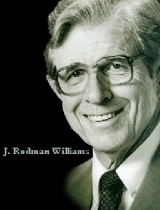
J. Rodman Williams


Here is a link to an invaluable resource from J. Rodman Williams of Regent University. Daniel Segraves, Robin Johnston, and other Oneness teachers also attend or have attended Regent as well. Regent is also the home of Vinson Synan who is one of the most esteemed Pentecostal historians and theologians to date. Williams presents Pentecostal Theology from several aspects. If you ever wonder what a Pentecostal's position on certain things should be, generally speaking, then this is a great place.

I highly recommend we all study his Ten Teachings (a basic Systematic Theology)and Scripture: God's Word. It will benefity any minister greatly. You can download much of his information from this website to save as a Word.doc or a .pdf for future use.

Note, as with any writing, you need to eat the meat and pick out the bones. Save us the "I only read Oneness authors post"! I am not saying you nor I agree with his teachings in whole but, overall he gives a much needed aspect in articulating a clear and broad Pentecostal Theology. Also, the word charismatic refers to the spiritual gifts and not a particular preference on holiness standards. So, even the Ultra-Con can glean a few things.

Charismatic Pentecostal Theology by J. Rodman Williams

5.26.2007

The Feast of Booths:

Then the LORD spoke to Moses, saying, (34) Speak to the children of Israel, saying: The fifteenth day of this seventh month shall be the Feast of Tabernacles for seven days to the LORD. (35) On the first day there shall be a holy convocation. You shall do no customary work on it. (36) For seven days you shall offer an offering made by fire to the LORD. On the eighth day you shall have a holy convocation, and you shall offer an offering made by fire to the LORD. It is a sacred assembly, and you shall do no customary work on it. (37) These are the feasts of the LORD which you shall proclaim to be holy convocations, to offer an offering made by fire to the LORD, a burnt offering and a grain offering, a sacrifice and drink offerings, everything on its day-- (38) besides the Sabbaths of the LORD, besides your gifts, besides all your vows, and besides all your freewill offerings which you give to the LORD. (39) Also on the fifteenth day of the seventh month, when you have gathered in the fruit of the land, you shall keep the feast of the LORD for seven days; on the first day there shall be a sabbath-rest, and on the eighth day a sabbath-rest. (40) And you shall take for yourselves on the first day the fruit of beautiful trees, branches of palm trees, the boughs of leafy trees, and willows of the brook; and you shall rejoice before the LORD your God for seven days. (41) You shall keep it as a feast to the LORD for seven days in the year. It shall be a statute forever in your generations. You shall celebrate it in the seventh month. (42) You shall dwell in booths for seven days. All who are native Israelites shall dwell in booths, (43) that your generations may know that I made the children of Israel dwell in booths when I brought them out of the land of Egypt: I am the LORD your God." (44) So Moses declared to the children of Israel the feasts of the LORD. (Leviticus 23:33-44 NKJV)


We often speak of various Jewish feasts and celebrations in our theological pursuits. The Feast of Tabernacle (or "booths") is one such feast. It is one of the most unique feasts in Judaism, in my opinion. This is due to the peculiar instructions God gave the Israelites. The Feast of Tabernacle (FOT hereon) was the fourth in a set of annual festival celebrations of Judaism (2 Chron. 8:13; Ezra 3:4; Zech. 14:16). On the Gregorian calendar this time is fixed around September or October. This feast was so well known in Judaism and the Old Testament scriptures that it was simply referred to as "the feast" (1 Kings 8:2; 2 Chron. 5:3; 7:8; Neh. 8:14; Isa. 30:29; Ezek. 45:23,25).


FOT encompasses a variety of Jewish historical and Torahic (something finding origin in the Torah) meaning. Whatever its nuances might be it is clear that it is to be celebrated perpetually (vs. 41) and with rejoicing (vs. 40). Today, this particular feast includes a celebration of the fall harvest and God’s provision for Israel. It is generally a very celebrated and anticipated feast. As the Leviticus passage demonstrated, above, FOT has origin in the Torah (Lev. 23:29-43). It is a time for remembrance of Israel’s deliverance from Egypt and their subsequent wandering in the wilderness for forty years. During this time Israel lived in tents and worshiped at the Tabernacle which was also a tent, both having specifications from God on the way each was to be built.


FOT was held after harvest and vintage (Deut 16:13); it began on fifteenth of seventh month (Lev 23:34,39); lasted seven days (Lev 23:34,41; Deut 16:13,15); all males obliged to appear at (Ex 23:16,17); to be observed with rejoicing (Deut 16:14,15); perpetually (Lev 23:41); people dwelt in booths during (Lev 23:42; Neh 8:15,16); the law publicly read every seventh year at (Deut 31:10–12; Neh 8:18); to commemorate the sojourn of Israel in the desert (Lev 23:43) and had remarkable celebrations of at the dedication of Solomon’s temple (1 Kin 8:2,65) as well as after the Egyptian captivity (Ex 3:4; Neh 8:17).(1)


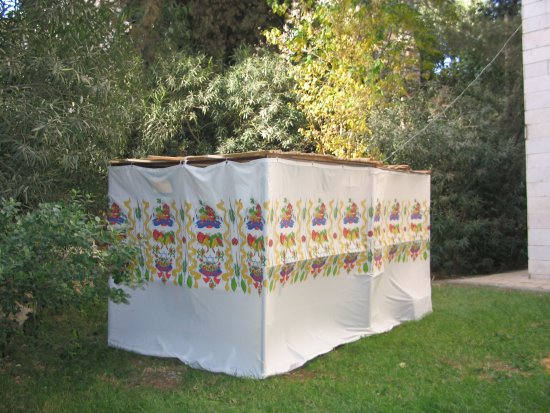
Today, when remembering this time Jews build small tabernacles or booths with walls of plaited branches and thatched roofs as God explicitly instructed in Leviticus 23:42. These booths/tents are still constructed in modern times. God instructed them to live in these booths for seven days. This served as a clear reminder of their days of tent living while wandering in the wilderness.

As we read the Leviticus passage, we can readily see that this event was a staged celebration by the Almighty Himself. Although, symbolisms and metaphors exist in this feast God makes it very plain his reasoning for this feast. It is encapsulated in vss. 42-44:

“You shall dwell in booths for seven days. All who are native Israelites shall dwell in booths, that your generations may know that I made the children of Israel dwell in booths when I brought them out of the land of Egypt:” (NKJV)

FOT “was instituted to remind the Israelites that their fathers dwelt in tents or booths in the wilderness (Leviticus 23:43), and to be an annual thanksgiving after all the crops of the land were gathered for the year (Leviticus 23:39). (2) It seems, then, that God’s express purpose is to cause Israel to remember His mercy and provision upon them by celebrating with the booths. A secondary purpose is to cause rejoicing and thanksgiving because of mercy and provision as well. A positve remembrance then can lead to thanksgiving and rejoicing.


The term "tabernacle" (rendered “booth” by KJV) or אהל in Old Testament Hebrew refers to a "tent of nomad" or a "dwelling" or a "sacred tent of Jehovah" (3) or a general covering. The idea was not, necessarily, to indicate Yahweh as the protector, preserver, and covering in heat and storm (Psalms. 27:5; 31:20; Isa. 4:6) only but to also serve as a celebration for the entire community, including family, slaves, widows, orphans, Levites, and sojourners (Deut. 16:13-15). It appears possible, then, for foreign slaves and those destitute and without familial connection, were to rejoice in the Feast!


As mentioned earlier, the Tabernacle in the Wilderness as well as the booths of the feast were to be built with explicit instruction from God. It was not a contrivance of man then, but something gifted to Israel, via Moses, by God.


Our savior, Jesus Christ, attended FOT. In fact, "after the Feast of Tabernacles in the temple, Jesus angers the Pharisees by claiming to be the light of the world" (4) as custom, FOT occurred in Jerusalem. After Christ arrived in Jerusalem and entered the Temple John’s Gospel proclaims,

"On the last day, that great day of the feast, Jesus stood and cried out, saying, If anyone thirsts, let him come to Me and drink. He who believes in Me, as the Scripture has said, out of his heart will flow rivers of living water. But this He spoke concerning the Spirit, whom those believing in Him would receive; for the Holy Spirit was not yet given, because Jesus was not yet glorified. (John 7:38-39 NKJV)

The phrase “on the last day” means that this event occurred on the last day of FOT.


As mentioned just prior, Jesus also upset the Pharisees by proclaiming to be the “light of the world”. Those travelling to the Temple would bring lights and torches. To add to the significance, the golden lamps stands would also be lighted thereby illuminating the Temple. Prophetically, this looked forward to the coming of the Messiah—Jesus Christ. Shortly, after FOT, Jesus spoke and said,


“…I am the light of the world. He who follows Me shall not walk in darkness, but have the light of life.” (John 8:12 NKJV)


By the pen of Luke, Paul carries this further at Antioch,

“For so the Lord has commanded us: I have set you as a light to the Gentiles, That you should be for salvation to the ends of the earth." (Acts 13:47 NKJV)


Paul tells us here that, not only is he sent to carry this light, but that this light is to be carried to the ends of the earth!


For certain, there are several nuances in this particular feast. However, there are at least two things, in FOT, that we have discussed prior that give some further meaning to practical Christian living.


First, as mentioned prior, a possible secondary purpose for FOT was to cause rejoicing and thanksgiving because of mercy and provision. Remember the recent death of a loved one does not always bring thanksgiving or rejoicing, but in some sense if the person is saved we should rejoice. So, positive remembrance should lead to thanksgiving and rejoicing. We should be careful in our daily lives and especially in public worship to always give proper remembrance (Rev. 2:4-5) and thanks (Eph. 5:20) to the great things that God has done.


Second, it appears all members then, even possible foreign slaves and those destitute and without familial connection, was to rejoice in the Feast. There is possible Christological symbolism here. In the NT Paul later tells us that it is by grace through faith that we have been saved. God's grace has been extended to all mankind (John 3:16); It is not the will of God for any man to perish (2 Peter 3:9); Race, gender, nor economic status are perquisite to salvation (Gal. 3:28). Likewise FOT extended rejoicing privileges to everyone regardless of status. Christ our covering and protection can be celebrated by ALL (John 3:16)!


NOTES:

  1. The MacArthur Study Bible (electronic ed.) (Re 21:27). MacArthur, J. J. (1997, c1997). Nashville: Word Pub.
  2. Enhanced Brown-Driver-Briggs Hebrew and English Lexicon. Brown, F., Driver, S. R., & Briggs, C. A. (2000). Strong's, TWOT, and GK references Copyright 2000 by Logos Research Systems, Inc. (electronic ed.) (13). Oak Harbor, WA: Logos Research Systems.
  3. Manners & Customs of the Bible. "Rewritten and updated by Harold J. Chadwick" Freeman, J. M., & Chadwick, H. J. (1998). --Cover.; Includes index. (Rev. ed.].) (123). North Brunswick, NJ: Bridge-Logos Publishers
  4. A Harmony of the Gospels. Robertson, A.T., , Harper & Row; New York` 1950.

Adversus Trinitas

"...unless you believe that I am he you will die in your sins." (John 8:24 ESV)