MSS = Manuscripts (plural)
MS = Manuscript (singular)
TR = Textus Receptus
Comma = Refers to Comma Johanneum (1 John 5:7-8)
1 John 5:7-8 For there are three that bear record [in heaven, the Father, the Word, and the Holy Ghost: and these three are one. And there are three that bear witness in earth,] the Spirit, and the water, and the blood: and these three agree in one. KJV
1 John 5:7-8, Trinitarianism and its Authenticity:
I do not hold to KJV Onlyism in any sense yet I do not condemn anyone who uses the KJV exclusively or another version. Personally, I use various versions (NKJV, NRSV, NLT, NIV, ESV, NET, etc.) for study and reference but also see the logic in using a single translation for pulpit and congregational use in order to avoid confusion. That said, I do not believe we can rightly suggest any version to be inspired. Only the original autographs were inspired in the Hebrew, some Aramaic and Greek languages. A version is exactly that—a version.
In this case, our English translations are versions of texts not in our native language. Attributing inspiration to the English texts is paramount to attributing inspiration, also, to those translating the text themselves. This fact should be clearly taught to and understood by all lay persons as to avoid confusion as well. Often times lay persons feel a particular English translation, most often the KJV, is the inerrant and infallible Word of God. This false notion gives rise to confusion especially over this very issue.
There have been many questions concerning this portion of text from Johns First Epistle. As Daniel Aikin points out, “This is not a question of the inspiration of the text but of the transmission of the text. John’s letter, whatever the original, is inerrant. What must be established is what the autographs actually said.” This is important to bear in mind as one seeks the truth in this matter.
Although supporters of the Trinitarian view utilize various texts, the Comma is a popular Trinitarian proof text. In fact, Bruce Metzger notes this of the Comma, “The passage is quoted by none of the Greek Fathers, who, had they known it, would most certainly have employed it in the Trinitarian controversies (Sabellian and Arian).” The first (15176) and second edition (1519) of Erasmus’ Greek text did not contain the Comma.
Thomas Holland suggests that the Comma “is a wonderful testimony to the Heavenly Trinity and should be maintained in our English versions.” William Burkitt, around 1703, suggested the Comma was omitted purposely by Arians in attempt to dilute Trinitarianism . Edward Hill, on the other hand, suggests the Comma could have been interpreted to be Sabellian and therefore considered an heretical addition. Hill suggests, “It is possible, therefore, that the Sabellian heresy brought the Johannine comma into disfavor with orthodox Christians.”
Metzger goes on to call this text a “totally spurious passage.” Aikin also notes, “Not one Greek or Latin Church Father ever quotes this passage in the first four and a half centuries. This is especially revealing in light of the many controversies revolving around the Trinity (especially Sabellianism and Arianism). If the Johannine Comma was a part of the original text, then what would be a better passage to quote in order to prove the Trinity? Nicea (A.D. 325) and Chalcedon (A.D. 451) almost certainly would have taken advantage of it. The absence of such usage causes one to doubt seriously the authenticity of this passage.”
Evidence for Comma Johanneum:
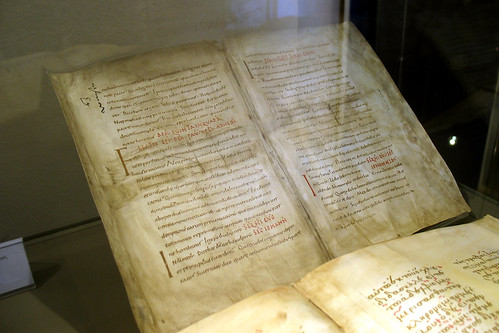
Portions of 1 John 5:7-8 are commonly referred to as the Comma Johanneum and I will reference it as the “Comma” hereon. While being found in several Latin mss (abbrev. for manuscripts) the Comma Johanneum (1 John 5:7, 8) is only found in eight Greek mss and these give evidences of being translations from the Latin Vulgate into Greek. The Codex Montfortianus is the oldest Greek mss containing the Comma and dates from the early sixteenth century. Four of the eight mss contain the Comma as merely a variant reading and are found in the margins which evidence it as a later addition.
All ancient versions such as the Syriac or Coptic, except Latin, lack the Comma as well. It should also be noted that the Comma is absent from the early forms of Old Latin and the Vulgate issued by Jerome. Concerning the Latin inclusion of the Comma the comments of Metzger are extremely noteworthy:
“The earliest instance of the passage being quoted as a part of the actual text of the Epistle is in a fourth century Latin treatise entitled Liber Apologeticus (chap. 4), attributed either to the Spanish heretic Priscillian (died about 385) or to his follower Bishop Instantius. Apparently the gloss arose when the original passage was understood to symbolize the Trinity (through the mention of three witnesses: the Spirit, the water, and the blood), an interpretation that may have been written first as a marginal note that afterwards found its way into the text. In the fifth century the gloss was quoted by Latin Fathers in North Africa and Italy as part of the text of the Epistle, and from the sixth century onwards it is found more and more frequently in manuscripts of the Old Latin and of the Vulgate. In these various witnesses the wording of the passage differs in several particulars.”
Desiderius Erasmus was the Greek scholar that rejected the inclusion of the Comma in his first and second editions of his Greek New Testament. This collection of Greek mss would eventually be called the Textus Receptus. This collection would also become the text base for translation of Martin Luther’s German Bible, William Tyndale’s New Testament, and the King James Version. Of course, Erasmus was not without his critics and was accused of negligence. To answer these replies Erasmus asserted that there was no Greek mss with the inclusion of the Comma and if there was it would have been included.
Aikin comments, “Shortly thereafter, a Greek manuscript containing the Johannine Comma was shown to Erasmus. It is almost certain that this manuscript was produced simply to induce Erasmus to include the Johannine Comma in his Greek New Testament. Even though Erasmus suspected this Greek manuscript to have been based on the Latin, there is doubt as to whether Erasmus knew that the manuscript had been created for the purpose of encouraging him to include the Johannine Comma. In the third edition of his Greek New Testament, Erasmus included the extra text (although he omitted the passage from later editions).”
In any event, the manuscript which forced Erasmus to reverse his stand is believed to be miniscule (referring to the script size) 61, or Codex Montfortianus, kept at Trinity College, Dublin. Critics believe that this manuscript was written for the special purpose of refuting Erasmus. In this regards Metzger notes, “the Greek manuscript had probably been written in Oxford in 1520 by a Franciscan friar named Froy who took the disputed words from the Latin Vulgate.”
The Comma then has become a minority reading in the Greek mss by most, if not all, scholars. Most contemporary versions, excluding the New King James Version, see it as an interpolation and exclude it from the main text and place it as a marginal note. Here are some six contemporary examples:
7 There are three that testify: 8 the Spirit and the water and the blood, and these three agree. NRSV
7 For there are three that testify: 8 the Spirit, the water, and the blood —and these three are in agreement. HCSB
7 For there are three that testify: 8 the Spirit, the water and the blood; and the three are in agreement. NIV
7 For there are three that testify: 8 the Spirit and the water and the blood; and these three agree. ESV
7 For there are three that testify, 8 the Spirit and the water and the blood, and these three are in agreement. NET
A Dangerous Dilemma or a Positive Opportunity?
Often when dialoguing this very issue pastors and teachers often suggest, sometimes with great angst, that discussing the issue of the Comma Johanneum is potentially confusing and devastating to a lay person’s faith in the Holy Scriptures. I believe the hesitancy to be wise but the fault is our own. Have we exalted an English translation of the Scriptures to the point that our hearers see it as inspired and infallible? Have we taught our hearers properly regarding the inspiration and transmission of the texts of Scripture? Have we taught about the various translations of Scripture and their functions or purpose?
No matter what we decide on the matter the Comma will not disappear nor will other considerations, such as the long or shorter ending of Mark 16. In our increasingly secular society atheists, agnostics and skeptics alike are recognizing and raising these very issues to whether we like it or not. At this point, the atheist, agnostic and skeptic are doing the teaching and not the minister. This has potentially worse affects upon a person’s faith especially if they have a too highly exalted view of an English translation.
Even other believers, from a church who uses another translation or those of other faiths discuss and are aware of this issue. It is only a matter of time before a lay person that is not in the know hears of such issues and wonders if they can truly have faith in the Word of God. The danger here is that the believer may be afraid to approach their pastor or teacher for fear of being rebellious or raising an issue their leaders are not familiar with. If they do not voice their concerns and instead keep the issue hidden within greater damage to their faith can also be done.
In either situation we are faced with a dilemma. The dilemma can be dangerous or it can be viewed as an opportunity to further engage believers in their study of the Scriptures. Paul, writing to Timothy at Ephesus, compels us:
2 Timothy 2:15, Be diligent to present yourself approved to God, a worker who does not need to be ashamed, rightly dividing the word of truth. NKJV
Although this letter is written to Timothy, a leader in the Church, the Word of God has been preserved for leaders and anyone who reads from its pages. Paul charges Timothy to be diligent or eagerly do ones best to present ourselves before God, with no fear of shame because they have “rightly” or accurately handled the truth. This should give all of us encouragement to study and push ourselves further in the study of God’s Word.
Too often we study or read the Scriptures to merely mine for “gold nuggets” that make for catchy phrases or interesting quips. Although there may be benefit in this it is merely a superficial method of discerning the Scriptures which themselves beckon us to look into them deeper.
Using Modern Translations:
At some point a pastor or teacher may consider using a modern translation. Previously I listed several translations of 1 John 5:7. J.R. Ensey, former president of Texas Bible College, recommends the ESV from his online bookstore and also uses the NIV to cite Scriptures from his blog . I would recommend either version for study but would encourage a literal translation, such as the ESV or NKJV, for use in congregational readings. Versions such as the NIV or New Living Translation are not literal translations. A literal translation seeks to offer the words of the original language word or word in the English language.
David Norris, professor at Urshan Graduate School of Theology, concerning using various translations, has rightly noted “Change is inevitable; nonetheless, change is almost always painful. For many, any move away from the KJV strikes at the very core of their religious identity.” Norris has also noted “If and when individual congregations decide to “officially” utilize other versions along with the KJV” there are at least three things to keep in mind.
1. “Bible studies on how the Bible came to us should first be offered.” He also suggests that “In such a study, saints need to hear humility in the voice of the teacher, not pride.”
2. “The teacher needs to leave room for people in the congregation to disagree with the perspective being taught.”
3. “Along with this, another thing that can go a long way in a congregation being open to change is when the preacher offers occasional statements as to why a particular passage from another version is a good reading.”
He also suggests that new churches have the opportunity to select a modern version with less problems. Older churches however will have to be handled differently with wisdom and care since some “have a lifetime of hearing and reading the KJV”. I believe the KJV is a good translation. In it we can find Gospel truth as in most other translations.
We should remember that none of the variants and errors that we see heralded or alluded to take away from any doctrine that we hold. No essential doctrine is affected by the absence or inclusion of the Comma Johanneum either.
NOTES:
1. Daniel L. Akin, 1, 2, 3 John, electronic ed., Logos Library System; The New American Commentary (Nashville: Broadman & Holman Publishers, 2001). 198; 199.
2. Bruce Manning Metzger and United Bible Societies, A Textual Commentary on the Greek New Testament, Second Edition a Companion Volume to the United Bible Societies' Greek New Testament (4th Rev. Ed.) (London; New York: United Bible Societies, 1994). 648.
3. Holland, Thomas. Crowned With Glory: The Bible from Ancient Text to Authorized Version Copyright 2000 by Dr. Thomas Holland. All Rights Reserved. Used with permission.
4. Burkitt, William. Expository Notes with Practical Observations on the New Testament (Gospels published 1700, Acts to Revelation published 1703). 1 John 5:8
5. Hill, Edwards F. The King James Version Defended Copyright 1956, 1973 by Edward Freer Hills. Copyright 1984 by Marjorie J. Hills.
6. Bruce Manning Metzger, The Bible in Translation : Ancient and English Versions (Grand Rapids, Mich.: Baker Academic, 2001). 80.
7. Metzger, Bruce M. The Text of the New Testament: Its Transmission, Corruption, and Restoration. 3 d ed. New York: Oxford University Press, 1992.
8. http://www.advanceministries.org/
9. http://jrenseyblog.wordpress.com/2009/12/
10. Norris, David K. “First of All—Do No Harm”. Symposium paper response presented at 2009 UGST Symposium.
JN Anderson