12.27.2008

Musings on Christian Influence in India


India is place of ancient things such as the most ancient sacred text, e.g. the Vedas. It is also a place of ancient people. A people seemingly stuck in a time of animism and worship of the created things. Sadly their worship does not extend to their actual Creator.

Christian influence in India has been profound. “It is widely believed that St. Thomas, the disciple of Jesus, first introduced the Christian faith to India nearly two thousand years ago.” Indeed, Christians in the city of Malabar “claim their church was “founded by the apostle Thomas.” They also suggest that Christianity was “certainly present in India by 300s.” It would be much later when European Christians would be instrumental in bringing significant growth of Christianity in India. This form of Christianity, which is primarily Western, was preceded by believers living in Portugal around 1498.

It is known that Gregory XIII (1502-1585) encouraged early missionizing of India. Gregory and a subsequent Catholic missionary to India—Francis Xavier (1506-1552)—were both believers in the Inquisition. Xavier landed in Goa, India in 1542. Goa is the smallest state in India in terms of both population and topography. Like most in his time, he saw the indigenous population as “rif-raff” and in sore need of Catholic indoctrination. Xavier was responsible for Jesuit mission work in 1540’s and also later in Madura. It has been estimated that Xavier and other Catholic missionaries won 150,000 converts by 1700. The influence of the Catholic Church however is longstanding and far reaching even today.


William Carey and Alexander Duff:


A Lutheran mission was established by 1706 and perhaps had a population of 20-40,000 believers. The highly impacting efforts of later Protestants would prove most successful in many regards (e.g. education, grammar, literature, medicine). This success was spawned in part by William Carey and Alexander Duff.

Carey’s influence, since his arrival in 1793, was very successful. He succeeded in having sati abolished from much of India. In 1992, Christian History, recorded some interesting statistics about Christianity during his time and just prior.

When Carey arrived he landed in Calcutta. From there he soon moves further inland. To preserve finances, he lives for three months in a “huge area of jungle, swamps, and rivers, to cultivate some rent-free land; begins building bamboo hut.”

Industrializing and education was a severe need in India at this time. One of the most influential achievements, while in Serampore, was when missionaries from England join Carey, andestablish a mission and printing press.

Alexander Duff (1806-1878), a Scottish Missionary, saw the cultural primitiveness of the Indians and “introduced British-style higher education” by the 1830’s. Duff envisioned and implemented a new approach to learning for the indigenous population. Although, he saw the negatives of Indian culture he simultaneously saw its potential.

Duff was a minister with the Established Church of Scotland in India. He quickly opend a school in Calcutta in 1830. His school would become a prominent center for education in India. In 1843 he joined the Free Church of Scotland and lost all of his Indian missionary property. During his last stay (1856-1865)in India he laid the foundation for the University of Calcutta (see picture).

Since 1855:

Starting in 1855, Protestant groups began to work together and unify. After a series of conferences in 1908 the South India United Church ( Presbyterian and Congregational) was formed. Later, in 1947 India experienced a further evolving into the formation of the Church of South India.

By the late 1900’s Christianity had taken a large role in the language and education of Indian people. In 1997, India Today reported the top ten colleges in India. Fifty percent of them were Christian. Using a 1991 a census, there is over 23 million Christian in India. These numbers seem positive but are actually nearly insignificant when we consider it is only 2.3 percent of the total Indian population. Some Christian organizers estimate more like 50 million.

Contemporary Indian Christianity:

In general, much of Christianity has evolved into Hindu Christianity. “Many Hindus are ready to accept the ethical teachings of the Gospels, particularly the Sermon on the Mount (whose influence on Gandhi is well known), but reject the theological superstructure.” The exclusive claims of Christianity are doubted and rejected. In fact, many higher class families in India send their children to high-quality schools that are typically organized by Christians associations or groups.

No matter which statistic we choose Christianity is growing in India. In the city of Delhi there are over 600 hundred churches with services in almost any major language. Bangalore has 970 churches and at least twelve accredited theological education centers. Chennai has a Christian population of 10 percent with more than 2,000 Christian churches scattered about the city.

The largest churches in Chennai however are Pentecostal in theological praxis. The New Life Assembly of God and the Apostolic Christian Assembly average about 23,000 and 15,000 in their Sunday School attendance records.


NOTES:

1. Houghton, Graham. "Christian Impact on India, History of." Encyclopedia of India. Ed. Stanley Wolpert. Vol. 1. Detroit: Charles Scribner's Sons, 2006. 247-252. 4 vols. Gale Virtual Reference Library. Gale. Liberty University. 16 Dec. 2008 .
2. William Carey's India." Christian History 11.4 (Nov. 1992): 25. Religion and Philosophy Collection. EBSCO. [Library name], [City], [State abbreviation]. 16 Dec. 2008 3. "Duff, Alexander" The Concise Oxford Dictionary of the Christian Church. Ed. E. A. Livingstone. Oxford University Press, 2006. Oxford Reference Online. Oxford University Press. Liberty University. 27 December 2008
AN=9604291061&site=ehost-live&scope=site>.
4. India, Pakistan, and Bangladesh, Christianity in" The Concise Oxford Dictionary of the Christian Church. Ed. E. A. Livingstone. Oxford University Press, 2006. Oxford Reference Online. Oxford University Press. Liberty University. 17 December 2008
5. Indian custom of a widow burning herself, either on the funeral pyre of her dead husband or in some other fashion, soon after his death. "suttee." Encyclopædia Britannica. 2008. Encyclopædia Britannica Online. 16 Dec. 2008 .
6. Zondervan Handbook to the History of Christianity (p. 470). Copyright © 2006 by Jonathan Hill
7. "Hinduism." Encyclopædia Britannica. 2008. Encyclopædia Britannica Online. 16 Dec. 2008 .

12.22.2008

A Brief History of Christmas


I. Introduction
II. Centuries Before Christ and Christmas
III. History of Christmas
IV. Christmas Is A Natural Response for Believers
V. The Christmas Reformation
VI. Key Players in the Reformation
VII. Conclusion


Romans 14:5-6 KJV

Alternative/Supplemental Text Readings:

Romans 14:5-6 NIV
(5) One man considers one day more sacred than another; another man considers every day alike. Each one should be fully convinced in his own mind.
(6) He who regards one day as special, does so to the Lord. He who eats meat, eats to the Lord, for he gives thanks to God; and he who abstains, does so to the Lord and gives thanks to God.


Colossians 2:16-17 NIV
(16) Therefore do not let anyone judge you by what you eat or drink, or with regard to a religious festival, a New Moon celebration or a Sabbath day.
(17) These are a shadow of the things that were to come; the reality, however, is found in Christ.


Christmas is and has been a struggle. No age or period of time is free of debate about this subject. In reality, Christmas has been a struggle to allow Christian traditions and practices to shine brightly in worldly society. I want to discuss what Christmas has been and what Christmas has been becoming.

Centuries Before Christ and Christmas:

People have been celebrating life and rebirth during the winter months. This was and is a human infatuation with things that can endure and thrive during the cold winter months.

Before 600 B.C. Mithra was established. It was a celebration that ended up evolving into Indian, Roman and Islamic traditions. They all worshipped Mithra in unique ways. Mithra supposedly sacrificed himself for world peace.

Norse (early Scandinavian Vikings) Yule Log on Dec. 21 Winter Solstice. Set on fire largest log they could find. Each spark represented new life to be born in the spring. Evergreens. Only tree that could live through the bitter Norse winter.

Germans – Odin. Germans were terrified of him because he rode during the night deciding who would prosper and perish.

In 1652 Christmas outlawed by Oliver Cromwell in order to remove influence of the Church/State. 1656. The English signed a petition that if they could not have Christmas then they wanted to restore the monarchy. This happened with King Charles II came to the throne that year. 1659 in Boston, Puritans/Protestants had Christmas outlawed. The Jamestown Colony and even New Yorkers however continued the tradition with fervor. (they even drank eggnog)

History of Christmas:

Christmas has been and will always be an integral part of our Christian lives. It is the time of year that most of the world pauses to celebrate and commemorate the birth and incarnation of Jesus Christ. The man who orients our common calendar system of BC and AD. (“before Christ”; “anno domini – year of our Lord”)

Historian Phillip Schaff stated, “In the first place, no corresponding festival was presented by the Old Testament, as in the case of Easter and Pentecost. In the second place, the day and month of the birth of Christ are nowhere stated in the gospel history, and cannot be certainly determined.”(Schaff's History of the Church)

The Scriptures do not reveal the exact date of Christ's birth, and the earliest Christians had no fixed time for observing it. It was not until the late fourth century that Christmas was generally celebrated in churches. Even then they differed on dates in different locations. It was typically called the Feast of the Nativity. Some abhorred the practice still.

Various methods were used in an attempt to compute the day of Christ's birth; among dates suggested by early church leaders were January 2, April 18, April 19, May 20, and December 25.

December 25 eventually became the officially recognized date for Christmas because it coincided with the pagan festivals celebrating Saturnalia and the winter solstice—a time when the sun is the farthest from the equator. The early church thereby offered Christmas on December 25 as a Christian alternative to the pagan festivities that were active simultaneous in their society.

Many in the church eventually reinterpreted many of their symbols and actions in ways acceptable to the Christian faith and practice. Not all are pagan in origin or practice.

For example, Jesus Christ was presented as the Sun of Righteousness (Mal. 4:2) therefore replacing the sun god, Sol Invictus.

Christians introduced Holly to symbolize the crown of thorns that were placed upon Christ’s brow. Christians also introduced singing of carols and the nativity crib being used in Christmas traditions. Poinsettia. This flower was introduced in 1828 to the USA by Joel Roberts Poinsett, the first US Ambassador to Mexico. It has been adapted into our Christmas traditions.

Christmas Cards: invented in England in 1843 by the J.C. Horsley Company.

Santa Claus: American invention really. He is a figure created mainly by the work of Clement C. Moore—an Episcopal minister. In 1822 he wrote a poem called, “A Visit from Saint Nicholas”. In the poem he introduced the idea of St. Nick coming down the chimney and gave gifts to all the children.

Moore possibly hid his authorship at first possibly because his poem actually integrated Christian and non-Christian customs. From this emerged who we call Santa Claus.

St. Nicholas – was a bishop in the Greek Orth. Church. On December 6th he would give gifts to all the children. Hollanders and the Dutch who migrated to North America called him Sinterklass. He wore a red cape, white cloths underneath, had a long white beard and would come to give gifts. The Norse and later German mythical figure called Odin who would ride on a white horse during the night place bad children in his red bag and giving presents to the good ones only.

Christmas Trees: a Norse or German invention as mentioned earlier. Besides bringing in the Yule Log they would bring in and decorate an Evergreen tree. For centuries, the Evergreen has symbolized life and rebirth because of its endurance of the hard winter cold.

Christians placed apples on the Evergreen Trees to convert the symbol to Christian meaning. The apples have since evolved into ornaments. Christmas Trees really hit English and American traditions when Queen Victoria married Prince Albert from Germany in 1839.

The royal families first Christmas included a Christmas Tree. It was actually noised all over England and soon became an English and American tradition.
Christmas Is A Natural Response for Believers:

It is my opinion, that regardless of Christmas history—as it relates to paganism or church history—Christmas is and still should be a time that we celebrate.

This is due to the overwhelming fact that as Christians, we would and should naturally select a time to celebrate the birth of the icon of our worship—Jesus Christ. It is a natural response from the followers of Christ to celebrate His birth, His resurrection, and His soon return.

The birth of Christ is compelling and demands recognition. The birth of Christ was from the womb of the Virgin Mary. Jesus Christ was God’s gift of eternal life to humanity…we should continue the spirit of giving of our time, our willingness, our affections, our love, and ourselves to Him and others.

The Christmas Reformation:

For the most part Christmas has resembled a carnival and a celebration. The ideas about Christmas that we enjoy today are recent in comparison to its overall celebration. The pagans found in the Norse, Germans, English have long celebrated during winter months. It was a hazardous time in some places.

In 1828 New York established its Police force because of the riotous celebrations that took place in years past.

In the early 19th Century, around December of each year, the streets of London would be flooded with celebrations and partying. Drunkenness and orgies were common. Typically a beggar or peasant was crowned King of Misrule. He would have his way as the lower class would bully the middle and higher classes.

Mankind was celebrating life and rebirth but had ignored that “the life” had come and had offered them “new birth”!

Key Players in the Reformation:

In the 19th Century were Washington Irving, Clement C. Moore and Charles Dickens profoundly impacted Christmas celebration in North America and parts of the world. America literally invented its own Christmas and possibly reinvented it for the rest of the world.

Many felt that Christmas was dying because of its rejection by Protestants and a general rejection of it because “nobody wanted to be like the British” anymore.

Charles Dickens's (explain nature of Dicken’s childhood and life) book A Christmas Carol, published in 1843, played a major role in reinventing Christmas as a holiday emphasizing family, goodwill, and compassion as opposed to community celebration and excess of vice like drinking.

In his book, Dicken’s writes about Ebenezer Scrooge (explain nature of Scrooge) who is eventually convinced to help others by the ghosts of Christmas past, present, and future. They succeed in showing Ebenezer, a middle class business owner, that helping others, being kind, and giving of yourself to others is what Christmas is all about.

In 1820’s several short stories by Washington Irving which appear in his The Sketch Book of Geoffrey Crayon and "Old Christmas", and by Clement Clarke Moore's 1822 poem A Visit From St. Nicholas (popularly known by its first line: Twas the Night Before Christmas). Irving's stories depicted harmony, warm-hearted holiday traditions he claimed to have observed in England. Although some argue that Irving invented the traditions he describes, they were widely imitated by his American readers.

The poem A Visit from Saint Nicholas popularized the tradition of exchanging gifts and seasonal Christmas shopping began to assume economic importance. In her 1850 book "The First Christmas in New England", Harriet Beecher Stowe includes a character who complains that the true meaning of Christmas was lost in a shopping spree.

Christmas was declared a United States Federal holiday in 1870, signed into law by President Ulysses S. Grant. Since that time it has become a marketing ploy. Even Santa became a ploy to sell toys. For years Macy’s and F.A.O. Schwartz have been using Santa in their stores to peddle their goods. Christmas is typically the largest annual economic stimulus for many nations.

Conclusion:

L.O. Baird said this, “May no gift be too small to give, nor too simple to receive, which is wrapped in thoughtfulness, and tied in love.”

Christmas today is generally carried out without pause or understanding that many of the traditions we participate in are not permanent, but are more of a recent invention. Commercialism and inventive marketing has created a unique Christmas culture in North America if nowhere else.

Christmas can serve to be a distraction. A distraction or a deflection by culture and the unregenerate of what Christmas should actually be about--Jesus Christ. Texts of Scripture such as Matthew 1:18 – 2:12, which contain the account of the Nativity and the virgin birth of our Lord, should be read at any of our traditionally Christmas celebrations. If not, we are overlooking and even neglecting the real reason for the season..

John 3:16 tells us that God gave the greatest gift because of His love. Not because of his greed or vice but because He loves those whom He has created and seeks intimacy with those who have believed upon Him. This is the message we must declare this to the world. God loved us so much that He entered our dimension, He became the uniquely born Son of God, so that our sins might be forgiven. So that we can live with Him in peace very soon.

11.29.2008

The King Who Will Exalt Himself

"The king will do as he pleases. He will exalt and magnify himself above every god and will say unheard-of things against the God of gods. He will be successful until the time of wrath is completed, for what has been determined must take place. He will show no regard for the gods of his fathers or for the one desired by women, nor will he regard any god, but will exalt himself above them all. Instead of them, he will honor a god of fortresses; a god unknown to his fathers he will honor with gold and silver, with precious stones and costly gifts. He will attack the mightiest fortresses with the help of a foreign god and will greatly honor those who acknowledge him. He will make them rulers over many people and will distribute the land at a price. "At the time of the end the king of the South will engage him in battle, and the king of the North will storm out against him with chariots and cavalry and a great fleet of ships. He will invade many countries and sweep through them like a flood. He will also invade the Beautiful Land. Many countries will fall, but Edom, Moab and the leaders of Ammon will be delivered from his hand. He will extend his power over many countries; Egypt will not escape. He will gain control of the treasures of gold and silver and all the riches of Egypt, with the Libyans and Nubians in submission. But reports from the east and the north will alarm him, and he will set out in a great rage to destroy and annihilate many. He will pitch his royal tents between the seas at the beautiful holy mountain. Yet he will come to his end, and no one will help him.

(Daniel 11:36-45 NIV)


Let's examine characteristics and identifying features of the future physical Antichrist. Feel free to post your thoughts or studies on this subject.

Some have suggested that the "king" who exalts himself in this excerpt from Daniel is actually referring only and literally to the historical figure Antiochus IV Epiphanes. There are some serious problems with this interpretation, even if taken strictly literal (which is supposed method of interpretation here).

Matthew 24:15 also says, "When ye therefore shall see the abomination of desolation, spoken of by Daniel the prophet, stand in the holy place, (whoso readeth, let him understand." KJV

It is not historically proven that the Abomination of Desolation has occurred. No such man has done what is prophetically required of him. No historical figure has set himself up in the temple, claimed to be God, and demand worship. Antiochus and others brought standards and other symbols in for worshiping other Gods like Jupiter.

D.S. Russell suggests the "king" or later "horn" is Antiochus as well, but also writes that "the human identity of this little horn is evidenced by its possession of human eyes and a mouth that speaks presumptuously."

Before we consider problems with that idea, I do recognize that there is also a spirit of Antichrist walking the world today. It is a spirit, as well, that has plagued many and still plagues many. I still contend though that this spirit, not of Christ but of the Devil, will be embodied or incarnated in a man who will serve as the physical anti-Christ who steps upon the Temple Mount and commits the Abomination of Desolation.

Biblical:


1. The historical data presented in Daniel 11: 36-45 are impossible to historically harmonize with Antiochus’ actual life.

2. This person, who exalts himself, will also be a ruler living in the last days themselves, immediately before the Second Coming (See v. 40). The Second Coming has not occurred since Christ has not appeared as He left, nor has He set up His millennial kingdom.

3. He is the same “horn” of Daniel 7:21 and the “ruler who will come” in Daniel 9:26.

Historical:

Traditional historic interpretation, like Chrysostom, Jerome, Theodoret, Leupold, Keil, Archer, Walvoord, suggest this person is a future antichrist. Even amillenialist Jerome stated, “Those of our persuasion believe all these things are spoken prophetically of the Antichrist who is to arise in the end time.” He also said that the Antichrist would be "one of the human race, in whom Satan will wholly take up his residence in bodily form."

The physical antichrist, the one in who satan will incarnate himself, will go well beyond anyone in history has ever done before. He will catch the rising tide of Secularism sweeping our globe and use its energy to create a new government. One without religion. Historical leaders who have sought to do similar things have been Antiochus himself, Nero, Domitian, Stalin and Hitler. The reign of the Antichrist will be one which will strive to be free of all religious vestiges.

NOTES:

The Jewish Study Bible—JPS TANAKH Translation. © 2004 by Oxford University Press, Inc.
Pťer-Contesse, R., & Ellington, J. (1993). A handbook on the Book of Daniel. UBS handbook series; Helps for translators (180). New York: United Bible Societies.
Russell, D. S. (2001, c1981). Daniel. The Daily study Bible series (141). Louisville: Westminster John Knox Press.
Jerome, Daniel, 129.
Jerome, Daniel, 77; cf. pp. 81–82.
__________________

The Dependency of Man:


~Trust in the LORD with all your heart and lean not on your own understanding; (Proverbs 3:5 NIV)~


Man, such a finite and feeble thing.

Man, with a heart deceitfully wicked

Man, hashing about the darkness of a thing.

Man, lost with hope neglected.

The Creator, such an infinite and marvelous thing.

The Creator, from whom flows light and truth.

The Creator, always dwelling in the light of a thing.

The Creator, your light and way since your youth.

Man, looking to the Creator and upon Him laying the blame.

Man, seeking reparation instead of repentance.

Man, forsaking the light of the Creator and rejecting His name.

Man, lost in his own way, and declaring his independence.

Man, tells God, “Why am I this way? You are the creator of my shame!”

God, tells man, “I did not create you this way, nor in such shame.”

Man, tells God, “I seek my own way, I declare my independence.”

God, tells man, “Your way you have found, and in your shame will you cry for independence!”


JN Anderson

11.27.2008

Musings on Thanksgiving:


The photo above is one of my favorite works by Norman Rockwell. His ability to capture special moments in this way is what makes his works almost identifiable on first glance. The season above and most of you now is one of Thanksgiving. Just last week I enjoyed refreshing my memory on the very first Thanksgiving. I made it a project of mine to look into this further. The evolution of Thanksgiving from then until today is a captivating story. Here are some highlights from my notes.

Mary Had A Little Lamb?

The lady who penned, Mary Had A Little Lamb, was actually the same woman who petitioned Abraham Lincoln to grant a day of Thanksgiving during the Civil War. This led to government recognition, with some controversy, when Franklin Delano Roosevelt was president. It appears it was for purely economical reasons too. The idea was to expand the holiday shopping season. 

Always the Fourth Thursday:

Thanksgiving is always on the fourth Thursday of November EVERY year. Never the occasional fifth.

Atheism and Thanksgiving?

This day is actually a great day for Christians to spread the Gospel with family and friends. What is Thanksgiving Day about if not "giving thanks"? We give thanks to God, our Creator. What is the atheist to do on this day? To whom does he or she give thanks? Some will say, "I will thank myself for my hardwork". This is the difference. As believers, we give thanks to the Almighty Creator of the heavens and the earth. Our hands did not set the seasons nor fix the moon in the sky. We are to look outside ourselves and avoid living only in our comfort zones. We give thanks to the one Who has placed the sun and the moon in the sky and has given us seasons to enjoy. To see the changing of the leaves and the death of winter. Then to see life come back again in the Spring.

Indians:

Most likely North American Indians used to do days of thanksgiving well before it was established by later European Christians. While not all men recognize their Creator a thankful, beating heart has always trodden the soil given him by his Creator. It is the duty of anyone who fears God/god. Psalm 65:2 says that all men pray. In this way we recognize a higher being than ourselves.

Giving Thanks:

In fact in the Genesis account God is already receiving offerings of thanks. The story of Cain and Abel is fitting here since they were returning to God the first-fruits  Giving thanks is worship, and God loves our thanks. As with the thanks of Cain and Abel however God is also concerned with our attitude. Or the subtle or hidden aspects of our soul. The spirit and attitude that God notices. Cain became angry before God. God inquired he was downcast and then God said, "If you do what is right, will you not be accepted? But if you do not do what is right, sin is crouching at your door; it desires to have you, but you must master it." God had mercy on Cain by warning him of his inner man. There is beauty in giving thanks. By giving thanks we demonstrate our free will by humbly and willingly yielding it to Him. It is impossible to serve two masters.

Giving thanks to God is profound and is in itself a powerful thing. To the gnostic, the atheist, or the unbeliever this day brings consternation. It should cry out for them to confront themselves. It is not about the Pumpkin pie (the Pilgrims didn't even have sugar. By that time their supply of sugar would have been depleted), or the Turkey. Did you know they probably ate seafood on first Thanksgiving Day? It is really all about giving thanks to God above. Thanking Him for his blessings and earnestly praying that He will continue to provide them with His sovereign hand.

Schleiermacher: Victor and Villain


Introduction:

The most influential theologian of the nineteenth century is often called the father of modern liberal theology or even the father of modern hermeneutics. Friedrich Daniel Ernst Schleiermacher was born in Germany in 1768. He was raised in Reformed Calvinism and educated in Niesky, Barby, and Halle. He would later become a theologian and philosopher that made lasting impressions on thought.

While at the University of Halle—in the early 1800’s—Schleiermacher started a translation of Plato that would become a standard in German literature. In 1809 Schleiermacher returned to his birth country—Germany—where he helped to found a new university—University of Berlin. One of his more famous students was David Strauss who wrote the highly controversial The Life of Jesus Critically Examined.

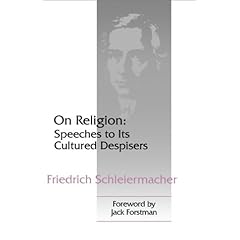
During tenure at Halle he also became familiar with the writings of Immanuel Kant. Kant was the opposite of objective rationalism to subjectivity, wherein God is beyond the access of reason. Schleiermacher would later write his famous work, “On Religion: Speeches to its Cultured Despisers.”

Today this work could be considered an apologetic against the criticisms of the Enlightenment. His work proclaimed that reason and objectivity are only a part of man and that feeling and emotions played a crucial role. Soren Kierkegaard was also a contemporary with Schleiermacher and their philosophies share affinity from Kantian revolution.

Making Sense, Since the Enlightmenment:

Philosopher Paul Tillich noted that Friedrich D.E. Schleiermacher attempted a “great synthesis in the theological realm.” To understand Schleiermacher one must understand the age or time in which he lived or the time in which he developed his epistemological structure. Schleiermacher stood out in his time because he was one who believed that a true philosopher could be a true believer. He was influenced by Pietism as he attended Moravian schools but was torn from those roots by questions from the French Enlightenment of the 17the Century. Schleiermacher was a Romanticist, existing just after a time when many “intellectuals had completely given up on Christianity as hopelessly outmodeled, irrational and superstitious.”
This sounds much like current times but then the only room for intellectual high-ground must be proven to be rational. Given this, Schleiermacher would go on to produce theological or religious works that constantly attempted to reconcile two opposing views:

1. Classical Protestantism
2. Enlightenment Criticism of the Seventeenth Century

It was not his objective to destroy or weaken true religion. It was his objective to prove its worth and value. To revive what was viewed as dead religion. Schleiermacher was one of the theologians that sought to bring respectability back to religion; to provide ample criticisms of the Enlightenment itself.

Experience Rules:

Schleiermacher may have erred in his fervor to rationalize his own subjectivism. It was the goal of his writings to “win the educated classes back to religion. Contending that religion was based on intuition and feeling and independent of all dogma.” The traditions and practices of Christianity only arise from expressions of monotheism. In his view, however, Christianity was not the only monotheists or the only “way”. In his work the Reden über die Religion Schleiermacher supports his thesis that “emotional experience forms the basis of religion, a conviction to which he adhered despite modifications contained in his later works. He considered creeds to be the expression rather than the foundation of religious experience,” In some sense, creeds are necessary but must be consistent with Biblical understanding. During the Enlightenment much of the violence can be attributed to revolt against dogma of the Catholic system that dominated France. Creeds then must be coherent for clear theological understanding.

Schleiermacher and Sabellianism:

Schleiermacher was also such a one who would defer conversation about the Trinity. In his scholarly work, God, Revelation, and Authority, Carl F. H. Henry notes that Schleiermacher “had an affinity for Sabellianism.” Sabellianism has been a common label, with modified forms, that has been placed on those who reject or press the envelope, so to speak, concerning the Trinity. I am not certain if Schleiermacher held this view, but Sabellius is said to have believed in patripassianism—meaning the Father suffered on the cross. Sabellius also believe that the manifestations of God appear in succession. He would deny a“trinity of essence and the permanence of the trinity of manifestation; making Father, Son, and Holy Ghost only temporary phenomena, which fulfil their mission and return into the abstract monad.”

The text of Scripture is quite clear though that it was the Son of God who suffered, died, and rose again. Sabellius did however reject the Trinity and his view has some affinity with that of Oneness theology held by many Pentecostal organizations, e.g. UPCI, ALJC, PAW.

Schleiermacher speaking of the Trinity, wrote, “there must still be in store for it (the doctrine of the trinity) a transformation which will go back to its very beginnings” Rightly so, his dissatisfaction with the Trinity was apparent.

Horace Bushnell:

The Britannica Encyclopedia links Schleiermacher to another antagonist of the Trinity—Horace Bushnell (1802-76). Bushnell attended Yale Divinity School and served as a pastor and theologian in New England. He lectured at Harvard frequently. Britannica notes, “Bushnell stood between the orthodox tradition of Puritan New England and the new romantic impulses represented by Ralph Waldo Emerson, Samuel Taylor Coleridge, and especially Friedrich Schleiermacher.”

Like Schleiermacher, Bushnell’s beliefs and influence is varied. “Bushnell's book on Christian nurture has exerted more influence on theories of Christian education among Protestants than any other work of recent times. His ideas on religious language anticipated much that is now being said about the crucial role of myth, symbol, story, and paradox in the discourse of the religions of the world.”Bushnell is also accredited for soundly refuting the prevalent Calvinism of Jonathan Edwards and for his essay on “Science and Religion”, published in 1868, that indicates his resistance to Darwinian evolution.

Conclusion:

Mathematics can be used for error and truth. This is reason enough for us to conclude that reason cannot be alone. Descartes cogito ergo sum does illustrate us as conscious beings capable of reason and rationality. This does not mean that organic matter is all that we are. Philosopher Mark Woodhouse has noted that “A neurophysiologist, while establishing correlations between certain brain functions and the feeling of pain, begins to wonder whether the “mind” is distinct from the brain.” This makes us aware of the belief that man is material and immaterial. Man is made in the image of God and therefore, even unregenerate, can exhibit the fingerprints of His Creator.

Religion is passive and static in society if it is a mere subjective feeling. Our feelings and emotion must not be ignored but they must be mitigated. Just as extreme rationalism is unwise, so is pure subjectivism. Schleiermacher helped weave Kantian subjectivity into Protestant theology. Germany and general hermeneutics have suffered from the influence of the victor over Enlightenment. In his stridence for victory he vilified what is sacred. Schleiermacher would later no longer hold the Scriptures as being infallible and to him “Christianity is not the only true religion, but the most complete.”

Apparently rationalism had taken a large influence upon free thought during the 17th Century. This era only pushed the proverbial snowball over the edge of the cliff. It was a hard jolt though because Romanticism screams to us that many had forsaken even the use of reason in theology and Scripture. To some Christianity was not intellectually honest. Today, Richard Dawkins would call us "stupid", and he means that quite literally.

The great atheist turned Christian C.S. Lewis, who wrote and debated during the early 19th Century, was compelled to state:

“To be ignorant and simple now - not to be able to meet the enemies on their own ground - would be to throw down our weapons, and betray our uneducated brethren who have, under God, no defense but us against the intellectual attacks of the heathen. Good philosophy must exist, if for no other reason, because bad philosophy needs to be answered.“


To every man an answer. I think Schleiermacher thought he was doing that, in a way. His theology perverted sound doctrine in some areas and possibly gave precedence for future dialog on matters like the Trinity. Indeed Tertullian, the one to coin the Latin term trinitas, (Trinity) notably held revelation above reason. In fact, Norman Geisler and P.D. Feinberg note, “It is true, nonetheless, that Tertullian exalted revelation above human reason. In one famous passage he cried out: “What indeed has Athens to do with Jerusalem? What concord is there between the academy and the church?”

There is danger in allowing revelation to exceed reason just as much as there is a danger in reason exceeding revelation. The two should be inseparably woven to complement each other.


Bibliography:

1) Shedd, W. G. T., & Gomes, A. W. (2003). Dogmatic theology. "First one-volume edition (3 vols. in 1)"--Jacket. (3rd ed.) (968). Phillipsburg, N.J.: P & R Pub. See also: Elwell, W. A., & Elwell, W. A. (1997, c1984). Vol. 1: Biographical entries from Evangelical dictionary of theology. Biographical entries from Evangelical Dictionary of Theology. (electronic ed.). Baker reference library; Logos Library System. Grand Rapids: Baker Book House.
2) Tillich, Paul. A History of Christian Thought. Copyright © 1967, 1968 Hannah Tillich. Published by Simon & Schuster, Inc. pg. 388
3) "Schleiermacher, Friedrich Daniel Ernst" The Concise Oxford Dictionary of the Christian Church. Ed. E. A. Livingstone. Oxford University Press, 2006.
4) Schleiermacher, Friedrich Daniel Ernst" The Oxford Companion to German Literature. Henry Garland and Mary Garland. Oxford University Press 1997.
5) Henry, C. F. H. (1999). God, revelation, and authority. Originally published: Waco, Tex.: Word Books, c1976-c1983. (5:213). Wheaton, Ill.: Crossway Books.
6) Schaff, Phillip P. Schaff's History of the Church, PC Study Bible formatted electronic database Copyright © 1999, 2003, 2005, 2006 by Biblesoft, Inc. All rights reserved
7) Schleirmacher, Friedrich Daniel Ernst. The Christian Faith, 172, p. 747
8) Bushnell, Horace." Encyclopædia Britannica. 2008. Encyclopædia Britannica Online. 27 Nov. 2008 .
9) Crosby, Donald. "Bushnell, Horace." Encyclopedia of Religion. Ed. Lindsay Jones. Vol. 2. 2nd ed. Detroit: Macmillan Reference USA, 2005. 1337-1338. 15 vols.
10) Woodhouse, Mark B., A Preface to Philosophy, Wadsworth Publishing. Pp. 25-26
11) Mr Stephen Priest "Schleiermacher, Friedrich Ernst-Daniel" The Oxford Companion to Philosophy. Oxford University Press 2005.
12) Lewis, C. S. The Weight of Glory. Harper Collins Publishers. pg. 50
13) Geisler, N. L., Feinberg, P. D., & Feinberg, P. D. (1980). Introduction to philosophy : A Christian perspective (262). Grand Rapids, Mich.: Baker Book House.

Adversus Trinitas

"...unless you believe that I am he you will die in your sins." (John 8:24 ESV)